
Contents
Introduction & Spiritual Essence: The Oceanic Lord of Kashi
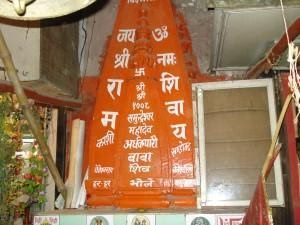
Deep within the spiritual labyrinth of Varanasi (Kashi), a sacred energy pulsates at the Bansphatak region. Here stands the Samudreshwar Temple, a historic shrine dedicated to Lord Shiva. In Sanskrit, Samudra means “Ocean,” and Ishwar means “Lord,” signifying the Samudreshwar as the one who encompasses the vastness of the universe within the sacred geography of Kashi.
Locals often refer to this deity as Ardha Kapari Baba. This specific form of Shiva is revered not just as a stone lingam, but as a powerful annihilator of past sins. According to scriptural traditions, worshiping Samudreshwar is believed to cleanse the devotee of the negative karmas accumulated through lifetimes.
Phalaśruti (The Divine Benefit):
According to the Kashi Khand (Chapter 97) of the Skanda Purana, Goddess Parvati once inquired about the various Shiv Lingas located in Kashi. Lord Shiva explained that in the vicinity of Ishaaneshwar and Langlishwar resides the Samudreshwor Linga. The scriptures state that devotees who worship this Linga will attain Siddhi (spiritual accomplishments) and Moksha (liberation). They shall transcend the cycle of ordinary existence and be regarded with reverence by the divine forces.
Historical Origins & Scriptural Legend
While the exact date of construction is not explicitly recorded in modern ledgers, the spiritual architecture of Samudreshwar is etched in ancient lore. The temple traces its origins to the Kashi Khand of the Skanda Purana, a primary scriptural reference that maps the divine geography of Varanasi.
The Legend:
Tradition holds that this shrine predates many modern structures in Varanasi. The local oral history suggests that the lingam is a Swayambhu (self-manifested) manifestation of Shiva. The name “Samudreshwar” holds a mystical duality: while it references the ocean (Samudra), it is situated miles from the sea. Folklore suggests that this name signifies the “ocean of consciousness” or that the energy here is as vast and deep as the ocean.
Historically, the temple fits into the spiritual fabric woven by sages and kings who patronized the Kashi Khand development. While specific dynastic records are sparse for this particular shrine compared to grandiose monuments, the Kashi Khand itself is attributed to the compilers of the Puranic age, dating back to roughly the 6th to 8th centuries CE, with subsequent layers of oral tradition solidifying the legends.
Architectural Marvels
Unlike the towering grandeur of South Indian temples, the Samudreshwar Temple follows the Nagara architectural style prevalent in North India, specifically adapted to the dense urban fabric of Varanasi.
Key Features:
The shrine is a compact yet potent structure. The sanctum sanctorum houses the lingam, which is often anointed with ghee and water by devotees. The exterior features traditional stone carvings common to the Kashi school of architecture—characterized by repetitive geometric patterns and motifs of the Kalasha (pot).
The temple does not boast a massive Shikhara (spire) but rather a modest shrine top, typical of urban Kashi temples where space is at a premium. The focus remains on the interior energy rather than exterior grandeur. The inner walls are often decorated with Sculpted Panels depicting stories from the Puranas, though the simple, rustic stone aesthetic remains dominant.
While the temple does not hold an ASI (Archaeological Survey of India) protected monument status or UNESCO listing, it is a vital part of the Kashi Vishwanath Corridor ecosystem, maintaining the ancient Vastu alignment central to Kashi’s spiritual grid.
Darshan & Ritual Logistics
To ensure a seamless spiritual experience, devotees should adhere to the following timings and seva schedules. Note that timings may vary slightly during festival seasons.
Daily Darshan Timings
| Session | Timing |
|---|---|
| Morning Darshan | 05:00 AM – 12:00 PM |
| Mid-Day Break (Shayan) | 12:00 PM – 3:00 PM |
| Evening Darshan | 3:00 PM – 11:00 PM |
| Shayan Aarti | 11:00 PM |
Key Sevas & Online Booking
Devotees can participate in specific rituals to enhance their spiritual connection. For the Samudreshwar temple, specific bookings are managed through the Varanasi temple administration portals or on-site arrangements.
- Rudrabhishekam: Performed for pacifying planetary afflictions and gaining prosperity.
- Shiva Mahapuran Path: Audio-visual recitations of the scriptures.
- Online Seva Booking: While Samudreshwar is a smaller shrine, many local priests facilitate bookings via WhatsApp or direct contact. For broader Kashi Vishwanath temple group bookings, visit the official Varanasi district temple portal.
2026 Major Festival Dates
Planning your visit around these dates offers a heightened devotional atmosphere, though crowds will be significant.
- Maha Shivaratri: February 26, 2026 (Bhattachariya Yajna and night-long vigil).
- Pradosh Vrat: Monthly (Dates vary by lunar calendar; key dates: Jan 11, Feb 10, Mar 12).
- Shravan Month: July 14 – Aug 11, 2026 (Peak pilgrim season).
- Deepawali/Annakut: October 20, 2026.
Practical Visitor Guidance
Varanasi is a sacred yet chaotic city. Preparation ensures a peaceful darshan.
- Dress Code: Traditional Indian attire (Kurta-Pajama for men, Saree/Salwar Kameez for women) is recommended. Avoid shorts or sleeveless tops as a mark of respect.
- Photography Rules: Photography inside the sanctum sanctorum is strictly prohibited. Exterior shots are allowed but should be respectful.
- Mobile & Lockers: Due to the narrow lanes (gullies) of Bansphatak, large bags are not allowed near the Kashi Vishwanath corridor. Utilize the designated cloakrooms at the Varanasi Junction Railway Station or the Vishwanath Temple Entrance gates before entering the lanes.
- Accessibility: The approach to Samudreshwar involves walking through narrow, crowded lanes. It is not suitable for wheelchairs. Comfortable footwear is essential as you will need to remove shoes before entering the temple complex.
- Crowd Management:
- Best Hours: 6:00 AM to 9:00 AM (Morning) and 4:00 PM to 6:00 PM (Evening).
- Seasonal Advice: Summer (May-June) is extremely hot; carry a water bottle and umbrella. Monsoon (July-August) makes the lanes slippery.
Pilgrimage Connectivity
How to Reach Samudreshwar Temple, Varanasi:
The temple is strategically located at Bansphatak, a major junction in Varanasi.
- Nearest Airport: Lal Bahadur Shastri International Airport (VNS) is approximately 25 km away. Taxis and the Metro (Kabir Chaura Station) are available.
- Nearest Railway Station: Varanasi Junction (BSB) is 4 km away. From the station, take an auto-rickshaw to Godowlia or Bansphatak (approx. 20 minutes depending on traffic).
- By Road:
- From Varanasi Junction: Head towards Chetganj/Kabir Chaura, proceeding towards Godowlia.
- From Ramnagar: Cross the Varanasi City bridge, proceed towards Chowk, and turn towards Bansphatak.
Nearby Sacred Sites (Pilgrimage Circuit)
Enhance your Kashi Yatra by visiting these nearby spiritual landmarks:
- Shri Kashi Vishwanath Temple (Jyotirlinga): Located just a few minutes walk from Bansphatak towards Chowk.
- Durga Temple (Monkey Temple): Located in Durgakund, approximately 1.5 km from Bansphatak.
- Sankat Mochan Hanuman Temple: Located 3 km away, known for relieving devotees from troubles.
Frequently Asked Questions (FAQs)
1. What is the significance of the name “Samudreshwar”?
While “Samudra” means ocean, in the context of Kashi, it symbolizes the ocean of consciousness and the infinite mercy of Lord Shiva. It is believed to grant salvation similar to a dip in the holy ocean.
2. Is there a VIP Darshan entry available?
As a traditional neighborhood temple, VIP entry systems are not formally established. However, visiting during non-peak hours (early morning) ensures a quick and peaceful darshan without queues.
3. How do I perform online seva booking?
For specific sevas at Samudreshwar, direct contact with the local priest is usually required. For broader temples in the Kashi Vishwanath Corridor, the Kashi Vishwanath Seva portal or the official Varanasi District administration website facilitates online bookings.
4. Is the temple open year-round?
Yes, the temple is open 365 days a year. It may close for a brief period during solar eclipses or specific extreme weather conditions as per Hindu traditions.
5. Where can I park my vehicle?
Due to the narrow lanes of Varanasi’s old city, vehicular access is restricted. Visitors must park at designated parking lots near Godowlia or Chowk and walk the remaining distance (approx. 10-15 minutes).
Recent Posts

Shri Kaamkoteeshwar Mandir, Varanasi – History & Significance
In the heart of Kashi, the eternal city of Lord Shiva, where the Ganges flows with celestial grace, stands the Shri Kaamkoteeshwar Mandir. This sacred Sannidhi is not merely a temple but a profound spiritual bridge between the Northern…

ओ सांवरे तूने ही मुझको संभाला – Lyrics & Meaning
ओ सांवरे तूने ही मुझको संभाला – A Prayer to Shyam Origin & Spiritual Essence Why This Bhajan Resonates Devotees chant this when overwhelmed by life’s storms—the refrain ‘तूने ही मुझको संभाला’ is the soul’s sigh of relief: “You…

कथा ये है महाराज मेरे की – Lyrics & Meaning
कथा ये है महाराज मेरे की छत्रपति संभाजी महाराज – A Prayer to Chhatrapati Sambhaji Maharaj Origin & Spiritual Essence Why This Bhajan Resonates Devotees chant this when their spirit feels tested—its powerful refrain “महाराज मेरे” is a soul’s…

Rigveda Samhita Yathartha Anuvada (ऋग्वेद संहिता यथार्थ अनुवाद) – Complete Set with Anvayartha & Hindi/English Translation
The Rigveda is the oldest surviving scripture of humanity and the foundational text of Sanātana Dharma. For serious students, scholars, UPSC aspirants studying ancient Indian history, Sanskrit learners, and spiritual seekers, a precise and grammatically structured translation is indispensable.…

आना भी अकेला है जाना भी अकेला है – Lyrics & Meaning | BharatTemples
आना भी अकेला है जाना भी अकेला है – A Prayer to the Divine Witness Origin & Spiritual Essence Why This Bhajan Resonates Devotees turn to this bhajan in moments of deep reflection—when life’s attachments begin to ache. The…

माता शेरावाली के द्वार जो भी जाता है – Lyrics & Meaning
माता शेरावाली के द्वार जो भी जाता है – A Prayer to Maa Sherawali Origin & Spiritual Essence Why This Bhajan Resonates Devotees turn to this bhajan in times of fear or uncertainty—its promise that no one leaves Maa’s…

मार लेना सपणी उबार लेणा भवरा – Lyrics & Meaning
मार लेना सपणी उबार लेणा भवरा – A Prayer to the Divine Beloved Origin & Spiritual Essence Why This Bhajan Resonates Devotees chant this in moments of deep vulnerability—its cry of “मार लेना सपणी, उबार लेणा भवरा” is the…

हमें श्याम सुंदर भरोसा तुम्हारा – Lyrics & Meaning
हमें श्याम सुंदर भरोसा तुम्हारा – A Prayer to Shyam Sundar Origin & Spiritual Essence Why This Bhajan Resonates Devotees chant this when feeling alone—its refrain ‘de do sahara’ is the soul’s cry for divine support. Lyrics in Hindi…

Mere Satguru Ne Di Thi Davai Lyrics in Hindi & Meaning
Mere Satguru Ne Di Thi Davai: Invoking the Guru’s Liberating Wisdom This soul-stirring bhajan venerates the Satguru (True Spiritual Master) as the divine physician who dispenses the only remedy for life’s deepest sufferings. Composed by Sant Karmaveer Tufani, it…

Janm Diyo Thari Maa Dukh Dekhiyo Lyrics in Hindi & Meaning
जन्म दियो थारी माँ दुख देखियो (Maa’s Grief Upon Birthing You) This soul-stirring Chetavani Bhajan (admonitory hymn) is addressed to the Divine Mother (Maa) – a call for repentance when children forget their filial duties in the dark age…