
Contents
Introduction & Spiritual Essence of Mitra Vinayak
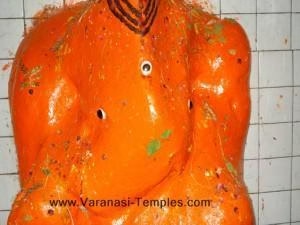
Amidst the eternal spiritual vibrancy of Kashi (Varanasi) lies the Mitra Vinayak Temple, a sanctum dedicated to Lord Ganesha, the remover of obstacles. Located near the historic Scindia Ghat, this temple is a beacon for devotees seeking success, prosperity, and the grace of Vighnaharta. The name “Mitra” translates to “friend,” signifying Ganesha as a benevolent companion who guides his devotees through life’s challenges.
Phalaśruti (Spiritual Benefits): According to local traditions and devotional texts, worshiping Mitra Vinayak is believed to bestow:
– Siddhi (Success) in new ventures and business.
– Removal of Planetary Doshas (malefic effects in one’s astrological chart).
– Cleansing of ancestral karma, ensuring peace for forefathers.
– Blessings of wisdom and intellect, essential for students and professionals.
Historical Origins & Scriptural Legend
The history of Mitra Vinayak Temple is deeply intertwined with the legends of Kashi. While specific inscriptions regarding the founding dynasty are obscure—common in the labyrinthine alleys of Varanasi—the temple follows ancient traditions of Swayambhu (self-manifested) idols found in the region.
The Legend: Tradition holds that this manifestation of Ganesha serves as a guardian of the southern bank of the Ganges. The locality, known as Atma Veereshwar, is steeped in Shaivite and Ganapatya lore. Historically, temples in this area were patronized by various dynasties, including the Marathas (Scindias) and local nobility during the 18th and 19th centuries, who contributed to the restoration of ghats and adjacent shrines.
According to temple records and oral histories passed down through generations of local priests, the idol of Mitra Vinayak faces the sacred Ganga river, absorbing the morning sun’s energy, which is considered highly auspicious for Ganesha worship.
Architectural Marvels
The architecture of the Mitra Vinayak Temple exemplifies the Nagara style adapted to the constraints of the dense Varanasi urban fabric. The temple features a tiered Shikhara (spire) that rises modestly but gracefully above the surrounding structures.
Key architectural elements include:
– Garbhagriha (Sanctum Sanctorum): Houses the primary deity facing east, allowing the first rays of the sun to illuminate the idol.
– Mandapa (Pillared Hall): Though compact, the hall features intricate carvings of mythological narratives and floral motifs typical of 19th-century North Indian temple art.
– Vastu Shastra: The temple layout adheres to Vastu principles, with the main entrance oriented to the North/East to channel positive energy.
While not a UNESCO World Heritage site, the temple is part of the larger heritage landscape of the Varanasi Ghats, which are protected under the Archaeological Survey of India (ASI) norms.
Photo Gallery

Darshan & Ritual Logistics (2026 Guide)
To ensure a seamless spiritual experience, devotees should plan their visit according to the daily schedules and annual festivals. Below is the standard schedule for 2026.
Daily Temple Timings
| Session | Timing |
|---|---|
| Morning Darshan | 6:00 AM – 12:00 PM |
| Afternoon Break | 12:00 PM – 4:00 PM |
| Evening Darshan | 4:00 PM – 9:00 PM |
Key Sevas & Online Booking
Devotees can book specific rituals through the official temple trust or authorized portals. Given the popularity of the temple, advance booking is recommended.
- Abhishekam (Ritual Bathing): Performed with milk, honey, and sugarcane juice. Best time: 7:00 AM.
- Archana (Name Offering): Can be performed daily. Cost: Nominal fee (approx. ₹50-100).
- Sankashti Chaturthi: A major monthly festival dedicated to Lord Ganesha.
Online Booking: Visit the official Varanasi Temple Trust portal or trusted third-party sites like [x] to book Seva in advance. Look for the “Mitra Vinayak” option under the Varanasi/Ghat list.
2026 Major Festival Dates
- Ganesh Chaturthi: September 6, 2026 (Sunrise to Moonrise).
- Sankashti Chaturthi: February 24, March 25, April 24, May 23, June 22, July 22, August 20, October 19, November 18, December 18.
- Magh Ganesh Chaturthi: January 26, 2026.
Practical Visitor Guidance
Visiting a heritage site in Varanasi requires preparation. Here are essential tips for 2026:
Dress Code & Etiquette
Modest clothing is mandatory. Men should wear Dhoti/Kurta or full-length trousers; women should wear Saree/Salwar Kameez covering shoulders and knees. Leather items are generally discouraged inside the sanctum.
Photography & Mobiles
Photography inside the sanctum is strictly prohibited. It is advisable to switch off mobile phones or keep them on silent mode. Some local locker facilities are available near Scindia Ghat, but carrying minimal luggage is advised due to narrow lanes.
Crowd Management & Accessibility
The temple is located in the dense Chowk area.
– Best Time to Visit: Early morning (6:00 AM – 8:00 AM) to avoid crowds.
– Seasonal Advice: Summers (April–June) are hot; carry water and a head cover. Winters are pleasant.
– Accessibility: The temple is not wheelchair accessible due to ancient steps and narrow lanes. However, electric rickshaws can get you close to Chowk.
Pilgrimage Connectivity
How to Reach Mitra Vinayak Temple
Address: CK-7/158, Scindia Ghat, Atma Veereshwar, Varanasi, Uttar Pradesh 221001.
- By Air: Lal Bahadur Shastri International Airport (LBS) is approximately 25 km away. Taxis and cabs are readily available to Dashashwamedh Ghat.
- By Rail: Varanasi Junction (BSB) is the nearest railway station (approx. 6 km). Auto-rickshaws can take you to Assi Ghat or Dashashwamedh Ghat.
- By Road: NH 19 connects Varanasi to major cities. From the city center, proceed towards the ghats.
- Final Leg: The temple is located near Scindia Ghat. One can take a boat ride across the Ganges to Scindia Ghat or walk through the bustling lanes of Chowk (starting from Dashashwamedh Ghat) to reach the site. Cycle rickshaws are available up to Chowk.
Nearby Sacred Sites (Pilgrimage Circuit)
- Atma Veereshwar Temple: Located in the same locality, dedicated to Lord Shiva.
- Scindia Ghat: A historic ghat known for the partially submerged Gupta Mahadev Temple.
- Baba Kaal Bhairav Temple: The guardian deity of Kashi, located within a short walking distance in the old city.
Frequently Asked Questions (FAQ)
1. Is there a VIP darshan entry at Mitra Vinayak Temple?
Generally, VIP darshan is not officially designated like in larger shrines (e.g., Tirupati). However, purchasing a specific Archana ticket often allows for quicker access to the sanctum during non-peak hours.
2. Can I perform a Ganesha Puja for my child’s naming ceremony?
Yes, the temple priests perform specialized Namkaran and Annaprashan ceremonies. It is recommended to contact the head priest (Pujari) at least 3 days in advance to book a slot.
3. What is the best time to visit to avoid crowds?
The best time is early morning between 6:00 AM and 8:00 AM, especially on weekdays. Tuesdays are considered highly auspicious for Lord Ganesha and tend to be busier.
4. Is the temple open during the monsoon season?
Yes, the temple remains open year-round. However, during heavy rains (July–August), water levels in the Ganges rise, and access via Scindia Ghat might require caution. Walking through the lanes is usually unaffected.
5. Is there a cloakroom or locker facility?
There are no official locker facilities within the temple premises due to space constraints. It is advised to carry only essential items like cash and a water bottle. Some private shops near Chowk offer luggage storage for a nominal fee.
Recent Posts

Shri Kaamkoteeshwar Mandir, Varanasi – History & Significance
In the heart of Kashi, the eternal city of Lord Shiva, where the Ganges flows with celestial grace, stands the Shri Kaamkoteeshwar Mandir. This sacred Sannidhi is not merely a temple but a profound spiritual bridge between the Northern…

ओ सांवरे तूने ही मुझको संभाला – Lyrics & Meaning
ओ सांवरे तूने ही मुझको संभाला – A Prayer to Shyam Origin & Spiritual Essence Why This Bhajan Resonates Devotees chant this when overwhelmed by life’s storms—the refrain ‘तूने ही मुझको संभाला’ is the soul’s sigh of relief: “You…

कथा ये है महाराज मेरे की – Lyrics & Meaning
कथा ये है महाराज मेरे की छत्रपति संभाजी महाराज – A Prayer to Chhatrapati Sambhaji Maharaj Origin & Spiritual Essence Why This Bhajan Resonates Devotees chant this when their spirit feels tested—its powerful refrain “महाराज मेरे” is a soul’s…

Rigveda Samhita Yathartha Anuvada (ऋग्वेद संहिता यथार्थ अनुवाद) – Complete Set with Anvayartha & Hindi/English Translation
The Rigveda is the oldest surviving scripture of humanity and the foundational text of Sanātana Dharma. For serious students, scholars, UPSC aspirants studying ancient Indian history, Sanskrit learners, and spiritual seekers, a precise and grammatically structured translation is indispensable.…

आना भी अकेला है जाना भी अकेला है – Lyrics & Meaning | BharatTemples
आना भी अकेला है जाना भी अकेला है – A Prayer to the Divine Witness Origin & Spiritual Essence Why This Bhajan Resonates Devotees turn to this bhajan in moments of deep reflection—when life’s attachments begin to ache. The…

माता शेरावाली के द्वार जो भी जाता है – Lyrics & Meaning
माता शेरावाली के द्वार जो भी जाता है – A Prayer to Maa Sherawali Origin & Spiritual Essence Why This Bhajan Resonates Devotees turn to this bhajan in times of fear or uncertainty—its promise that no one leaves Maa’s…

मार लेना सपणी उबार लेणा भवरा – Lyrics & Meaning
मार लेना सपणी उबार लेणा भवरा – A Prayer to the Divine Beloved Origin & Spiritual Essence Why This Bhajan Resonates Devotees chant this in moments of deep vulnerability—its cry of “मार लेना सपणी, उबार लेणा भवरा” is the…

हमें श्याम सुंदर भरोसा तुम्हारा – Lyrics & Meaning
हमें श्याम सुंदर भरोसा तुम्हारा – A Prayer to Shyam Sundar Origin & Spiritual Essence Why This Bhajan Resonates Devotees chant this when feeling alone—its refrain ‘de do sahara’ is the soul’s cry for divine support. Lyrics in Hindi…

Mere Satguru Ne Di Thi Davai Lyrics in Hindi & Meaning
Mere Satguru Ne Di Thi Davai: Invoking the Guru’s Liberating Wisdom This soul-stirring bhajan venerates the Satguru (True Spiritual Master) as the divine physician who dispenses the only remedy for life’s deepest sufferings. Composed by Sant Karmaveer Tufani, it…

Janm Diyo Thari Maa Dukh Dekhiyo Lyrics in Hindi & Meaning
जन्म दियो थारी माँ दुख देखियो (Maa’s Grief Upon Birthing You) This soul-stirring Chetavani Bhajan (admonitory hymn) is addressed to the Divine Mother (Maa) – a call for repentance when children forget their filial duties in the dark age…