
Contents
- 1 The Eternal Abode of Vaidyanath: A Complete Guide to Baijnath Temple
The Eternal Abode of Vaidyanath: A Complete Guide to Baijnath Temple
Deep in the serene valleys of Himachal Pradesh lies a stone testament to faith that has weathered earthquakes, invasions, and centuries of devotion. As the Lead Heritage Architect of bharattemples.com, I welcome you to the definitive guide for the Baijnath Temple, a premier pilgrimage site dedicated to Lord Shiva as Vaidyanath, the “Lord of Physicians.”
1. Introduction & Spiritual Essence
The Baijnath Temple is not merely a structure of stone; it is a living energy center known as the Kshetra. The primary deity here is Lord Vaidyanath, an aspect of Shiva revered for his healing powers.
- Deity: Vaidyanath (Shiva)
- Form: Swayambhu (Self-manifested) Shiva Lingam
- Location: Baijnath, Kangra District, Himachal Pradesh
Phalaśruti: The Spiritual Benefits
According to ancient traditions, a pilgrimage to this temple is believed to offer profound spiritual merit. The Phalaśruti (scriptural benefits) suggests that devotees who offer sincere prayers here are:
- Cleansed of Ancestral Karma: It is believed that performing rituals here helps ancestors attain Moksha (liberation), resolving Pitra Dosha.
- Healers of Ailments: As Vaidyanath, the Lord is the supreme doctor. Devotees visit to seek relief from chronic illnesses and mental afflictions.
- Destined for Liberation: The temple is considered a gateway to spiritual awakening, helping devotees break the cycle of rebirth.
2. Historical Origins & Scriptural Legend
As an architect, I look at the stones and see stories. The Baijnath Temple stands as a guardian of history, built during a time of cultural renaissance in the Kangra valley.
Builders and Inscriptions
The present structure dates back to 1204 A.D. (Indian National Calendar year 1126). According to the inscriptions on the stone slabs in the main hall, the temple was constructed by two local merchants named Ahuka and Manyuka. While the inner sanctum holds the ancient Shiva Lingam, the structural integrity and the grandeur of the exterior are their legacy.
Scriptural and Local Legends
According to temple records: The inscriptions are engraved in Sanskrit using the Sharada script and local Pahari in the Takri script. They mention King Jaya Chandra, the then-ruler of the region (formerly known as Nagarakot).
Tradition holds: The name “Baijnath” is derived from Vaidyanath. Legend states that two sages, Shusharma and Narad, meditated here to please Lord Shiva. Impressed, Shiva granted them the boon to cure all diseases, thus establishing himself as Vaidyanath. This history predates the current stone structure, hinting at a much older temple existing at the site before 1204 A.D.
3. Architectural Marvels
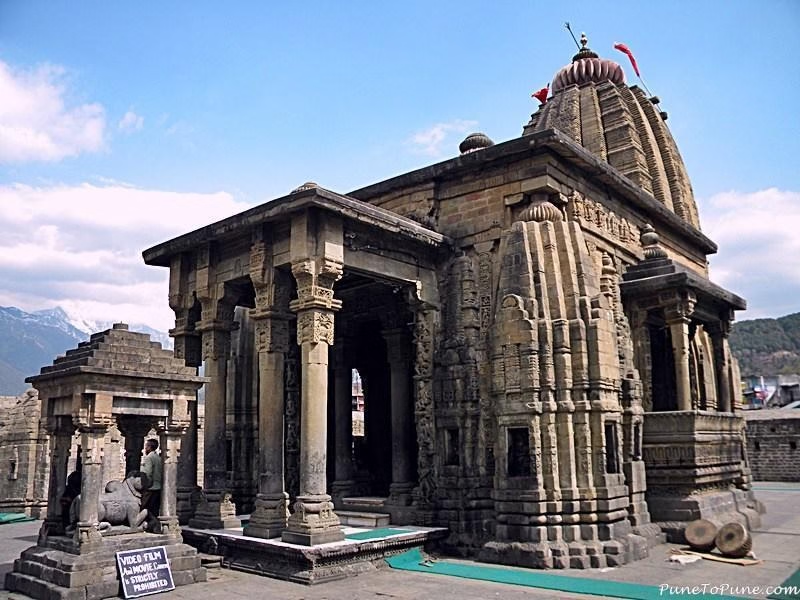
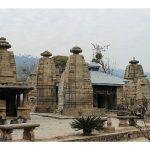
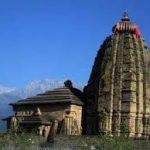
As a Heritage Architect, the Baijnath Temple is a masterpiece of the Nagara style of North Indian temple architecture. It represents a perfect synthesis of functionality and divinity.
Structure and Vastu
- The Sanctum (Garbhagriha): The inner sanctum houses the Shiva Lingam. It is designed according to Vastu Shastra principles to accumulate spiritual energy.
- The Mandapa: The temple features a spacious pillared hall (Mandapa) adorned with intricate carvings. The roof is supported by massive stone pillars, each telling a story through etchings.
- The Shikhara (Spire): The curvilinear tower rises majestically, typical of the Nagara style. The exterior walls are decorated with niches containing images of various deities, including Goddess Parvati, Lord Ganesha, and Sun God.
- Heritage Status: While it is a masterpiece of medieval Indian architecture, it is maintained by the Archaeological Survey of India (ASI) to preserve its historical integrity.
4. Darshan & Ritual Logistics
Planning your visit requires attention to the daily rituals and seasonal timings. The temple follows a strict liturgical calendar.
Daily Timings
Please note that temple timings may vary slightly during winter months and festivals.
| Session | Timings | Activity |
|---|---|---|
| Morning | 06:00 AM – 12:30 PM | Morning Aarti, Abhishekam, General Darshan |
| Evening | 04:00 PM – 09:30 PM | Evening Aarti, Shayan Aarti |
| Special Note: The temple remains closed in the afternoon (12:30 PM – 4:00 PM) for rest. | ||
Key Sevas & Online Booking
- Abhishekam: The ritual bathing of the Shiva Lingam with milk, honey, and sacred water. Best performed during the morning hours.
- Archana (Pujan): Recitation of the devotee’s name and gotra. Can be performed daily.
- Online Booking: As of 2026, the Temple Committee has streamlined digital services. Devotees can book Sevas via the official Himachal Pradesh Tourism portal or the local temple committee website to skip queues.
2026 Festival Calendar
- Maha Shivaratri: February 26, 2026 (Major pilgrimage peak).
- Shivratri Jatra: The local fair spans 3 days in February/March.
- Makar Sankranti: January 14, 2026.
- Monthly Shivratri: Every month on the 13th/14th lunar day.
5. Practical Visitor Guidance
To ensure a respectful and comfortable experience, please adhere to the following guidelines.
Dress Code and Conduct
- Attire: Traditional Indian wear (Kurta-Pajama, Saree, or Salwar Kameez) is preferred. Western clothing should be modest and covered.
- Photography: Photography is permitted in the temple complex but strictly prohibited inside the sanctum sanctorum (Garbhagriha).
- Mobile Phones: Silence your phone. Mobile lockers are available near the entrance for storing electronics.
Accessibility and Crowd Management
- Best Hours to Visit: To avoid crowds, visit between 7:00 AM and 9:00 AM, or post 6:00 PM.
- Seasonal Advice:
- Summer (May-June): Days can be warm; carry water and a hat. Early morning visits are recommended.
- Winter (Nov-Feb): Temperatures drop significantly. Carry woolens. Evenings are chilly but beautiful.
- Accessibility: The temple complex is on level ground with stone steps. It is generally accessible, though those with mobility issues may require assistance.
6. Pilgrimage Connectivity
How to Reach
- By Air: The nearest airport is Gaggal Airport (Dharamshala), approximately 50 km away.
- By Rail: The nearest broad-gauge railway station is Joginder Nagar (55 km). The nearest major railhead is Pathankot (115 km).
- By Road: Baijnath is well-connected via National Highway 154 (formerly NH 88). It is 16 km from Palampur and 53 km from Kangra town. Regular buses ply from Dharamshala and Pathankot.
Nearby Sacred Sites (The Pilgrimage Circuit)
Extend your spiritual journey by visiting these nearby sites:
- Prashar Lake: A high-altitude lake with a floating island and a three-storied pagoda-style temple dedicated to the sage Prashar.
- Jogindernagar Power House & Shiva Temple: Known for its unique hydropower history and ancient shrines.
- Masroor Rock Cut Temple: Located 40 km away, these monolithic rock-cut temples are a marvel of ancient engineering and artistry.
7. Frequently Asked Questions (FAQ)
1. Is there a VIP Darshan entry available at Baijnath Temple?
While the temple does not have a commercial “VIP ticket” system like some large shrines, donors and special guests can request a Priority Darshan pass through the temple office for a nominal donation. This is subject to the discretion of the temple committee.
2. Are non-Hindus allowed inside the temple?
Baijnath Temple is primarily a place of worship for Hindus. Non-Hindus may be allowed into the outer courtyard and mandapa but are typically requested not to enter the inner sanctum. It is advisable to check with the temple authorities upon arrival.
3. Where can I stay near the temple?
Accommodation is available in Palampur (16 km) and Bir (12 km), which offer hotels, guest houses, and homestays. The temple trust also maintains a Dharamshala for pilgrims.
4. What is the best time of year to visit?
The ideal months are March to June and September to November. The weather is pleasant, and the sky is clear, offering stunning views of the Dhauladhar mountain ranges.
5. Is photography allowed inside the inner sanctum?
No. To maintain the sanctity of the rituals and respect the deity, photography is strictly prohibited inside the inner sanctum (Garbhagriha).
Photo Gallery

Contact Details
Official Address:
Baijnath Temple Committee,
Baijnath, District Kangra,
Himachal Pradesh, India
For more architectural insights and travel guides, visit bharattemples.com regularly.
Recent Posts

Shri Kaamkoteeshwar Mandir, Varanasi – History & Significance
In the heart of Kashi, the eternal city of Lord Shiva, where the Ganges flows with celestial grace, stands the Shri Kaamkoteeshwar Mandir. This sacred Sannidhi is not merely a temple but a profound spiritual bridge between the Northern…

ओ सांवरे तूने ही मुझको संभाला – Lyrics & Meaning
ओ सांवरे तूने ही मुझको संभाला – A Prayer to Shyam Origin & Spiritual Essence Why This Bhajan Resonates Devotees chant this when overwhelmed by life’s storms—the refrain ‘तूने ही मुझको संभाला’ is the soul’s sigh of relief: “You…

कथा ये है महाराज मेरे की – Lyrics & Meaning
कथा ये है महाराज मेरे की छत्रपति संभाजी महाराज – A Prayer to Chhatrapati Sambhaji Maharaj Origin & Spiritual Essence Why This Bhajan Resonates Devotees chant this when their spirit feels tested—its powerful refrain “महाराज मेरे” is a soul’s…

Rigveda Samhita Yathartha Anuvada (ऋग्वेद संहिता यथार्थ अनुवाद) – Complete Set with Anvayartha & Hindi/English Translation
The Rigveda is the oldest surviving scripture of humanity and the foundational text of Sanātana Dharma. For serious students, scholars, UPSC aspirants studying ancient Indian history, Sanskrit learners, and spiritual seekers, a precise and grammatically structured translation is indispensable.…

आना भी अकेला है जाना भी अकेला है – Lyrics & Meaning | BharatTemples
आना भी अकेला है जाना भी अकेला है – A Prayer to the Divine Witness Origin & Spiritual Essence Why This Bhajan Resonates Devotees turn to this bhajan in moments of deep reflection—when life’s attachments begin to ache. The…

माता शेरावाली के द्वार जो भी जाता है – Lyrics & Meaning
माता शेरावाली के द्वार जो भी जाता है – A Prayer to Maa Sherawali Origin & Spiritual Essence Why This Bhajan Resonates Devotees turn to this bhajan in times of fear or uncertainty—its promise that no one leaves Maa’s…

मार लेना सपणी उबार लेणा भवरा – Lyrics & Meaning
मार लेना सपणी उबार लेणा भवरा – A Prayer to the Divine Beloved Origin & Spiritual Essence Why This Bhajan Resonates Devotees chant this in moments of deep vulnerability—its cry of “मार लेना सपणी, उबार लेणा भवरा” is the…

हमें श्याम सुंदर भरोसा तुम्हारा – Lyrics & Meaning
हमें श्याम सुंदर भरोसा तुम्हारा – A Prayer to Shyam Sundar Origin & Spiritual Essence Why This Bhajan Resonates Devotees chant this when feeling alone—its refrain ‘de do sahara’ is the soul’s cry for divine support. Lyrics in Hindi…

Mere Satguru Ne Di Thi Davai Lyrics in Hindi & Meaning
Mere Satguru Ne Di Thi Davai: Invoking the Guru’s Liberating Wisdom This soul-stirring bhajan venerates the Satguru (True Spiritual Master) as the divine physician who dispenses the only remedy for life’s deepest sufferings. Composed by Sant Karmaveer Tufani, it…

Janm Diyo Thari Maa Dukh Dekhiyo Lyrics in Hindi & Meaning
जन्म दियो थारी माँ दुख देखियो (Maa’s Grief Upon Birthing You) This soul-stirring Chetavani Bhajan (admonitory hymn) is addressed to the Divine Mother (Maa) – a call for repentance when children forget their filial duties in the dark age…