
Contents
Introduction & Spiritual Essence
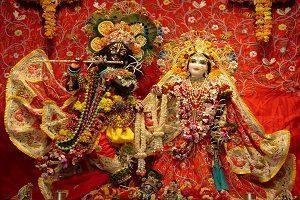
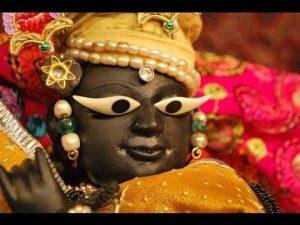
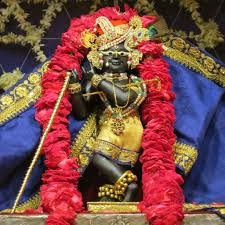
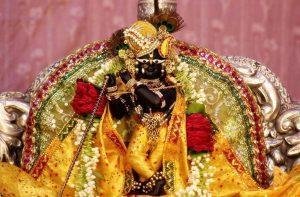
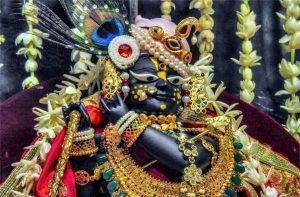
The Shri Radha Raman Temple stands as a timeless beacon of devotion in Vrindavan, Uttar Pradesh. Dedicated to Lord Krishna in his form as “Ramana” (the enjoyer), this sacred shrine is not merely a structure carved from stone but a living testimony to divine manifestation. The primary deity here, Radha Raman, is a Swayambhu (self-manifested) Murti that emerged miraculously from a Saligram Shila (holy ammonite stone) over 480 years ago.
Phalaśruti (Spiritual Benefits): Why do devotees flock to this ancient shrine? According to Vedic tradition, offering prayers here helps in:
- Cleansing Ancestral Karma: It is believed that worshiping Radha Raman assists in liberating ancestors from karmic debts.
- Attaining Devotional Bliss: The deity is renowned for his mystic smile, and devotees feel an immediate connection to the divine pastimes of Vrindavan.
- Protection: As one of the few deities who remained in Vrindavan during the Mughal invasions, the temple holds a powerful protective energy.
Historical Origins & Scriptural Legend
The Appearance of Radha Raman
According to temple records and the Sthala Purana, the Radha Raman deity appeared in the year 1542 CE (Vaisakh Shukla Purnima). The temple was established by Sri Gopala Bhatta Goswami, one of the six Goswamis of Vrindavan and a direct disciple of Chaitanya Mahaprabhu.
Tradition holds that Gopala Bhatta Goswami, after receiving twelve Saligram Shilas from the Gandaki River in Nepal, prayed intensely for a form of the Lord. One day, upon seeing his devotion, the Lord manifested as Radha Raman from one of the shilas. Notably, the deity appeared with markings of discs (Sudarshan Chakra) on his back and feet.
Architectural History
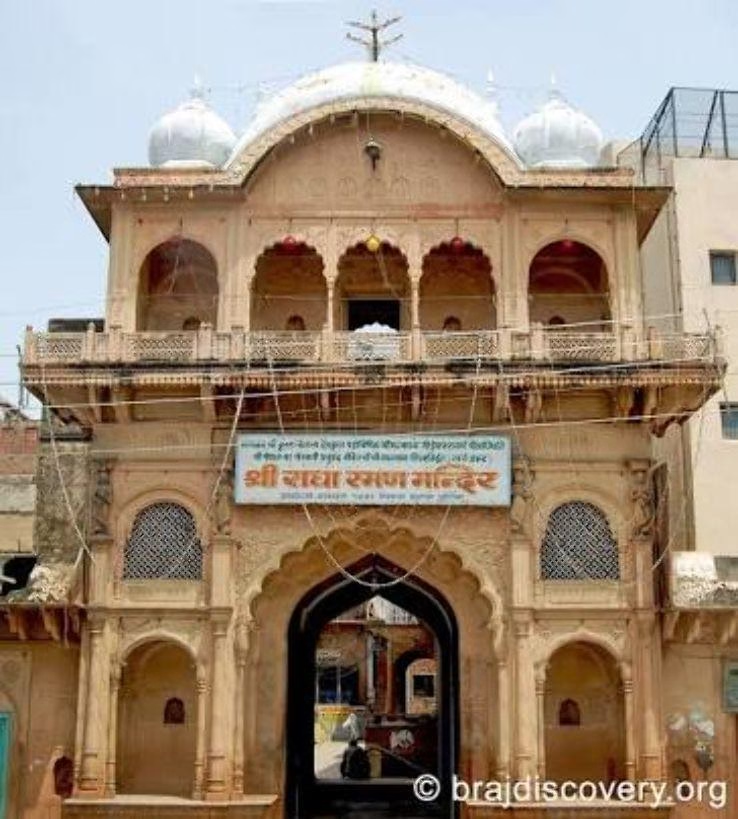
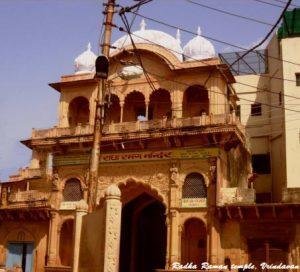
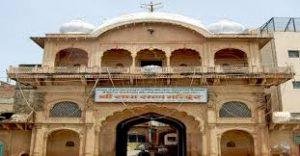
The current temple structure was erected in 1826 CE by Shah Behari Lallji of Lucknow (grandfather of the builders of the famous Shahji Temple). While the deity dates back to the 16th century, the temple has undergone renovations to preserve its sanctity. A unique historical aspect is that Radha Raman is the only major deity in Vrindavan who never left the city, even when Mughal Emperor Aurangzeb raided the region; other deities were moved to safer locations.
Architectural Marvels
Style and Design
The Radha Raman Temple is a quintessential example of Nagara-style temple architecture, adapted to the regional aesthetics of Braj. Unlike many temples that house separate deities of Radha and Krishna, this shrine is unique because the Shikhara (spire) enshrines only Radha Raman.
Notable Features
- The Original Murti: Standing approximately 30 cm (1 foot) tall, the deity is carved with exquisite detail, capturing the divine smile of Krishna.
- The Nameplate: Adjacent to the deity is a golden plate engraved with the name of Srimati Radharani. Since the deity of Radha was not self-manifested, her name is worshiped alongside Krishna, signifying the non-difference between the name and the person.
- Heritage Status: While not a UNESCO site, the temple is preserved under the guidance of the Archaeological Survey of India (ASI) standards due to its age and cultural significance.
The temple complex also houses the Samadhi of Gopala Bhatta Goswami, located to the left of the main entrance, which is a site of daily Bhajans and Kirtans.
Darshan & Ritual Logistics
The worship standards at Radha Raman Temple are considered the highest in Vrindavan. The fires in the kitchen have burned continuously since the deity’s installation in 1542, without the use of modern matches for ignition.
Daily Darshan Timings
| Darshan Slot | Timings |
|---|---|
| Morning (Mangala) | 05:00 AM – 12:00 PM |
| Afternoon Break | 12:00 PM – 04:30 PM |
| Evening (Shayan) | 05:00 PM – 09:30 PM |
Note: Timings may vary slightly during festivals. The temple is closed between 12:00 PM and 4:30 PM.
Key Sevas & Online Booking
Devotees can book specific Sevas online. The temple trust uses a digital portal for registration.
- Abhishekam: Performed daily with Yamuna water and milk.
- Raja Bhoga: The main offering. Interestingly, food is offered in a sequence: first to Radha Raman, then to Radharani, and finally to Gopala Bhatta Goswami (on the same plate).
- Special Occasions: The deity’s appearance day (Gaura Purnima) is celebrated with grand Abhishekam.
Online Seva Booking: Visit the official trust website or contact +91 9927435368 for current payment gateways.
2026 Major Festival Dates
- Holi (Phagun Purnima): March 13, 2026
- Ram Navami: April 5, 2026
- Radha Raman Appearance (Gaura Purnima): March 14, 2026
- Janmashtami: September 14, 2026
- Deepotsav (Annakut): November 1, 2026
Practical Visitor Guidance
Dress Code & Etiquette
As with all Braj temples, modest attire is mandatory. Men should wear Dhotis or trousers (no shorts), and women should wear sarees or long skirts. The temple provides Dhotis on rent at the entrance for a nominal fee.
Photography & Lockers
Strictly no photography is allowed inside the inner sanctum. Mobile phones must be switched off or deposited in the free locker facility provided at the entrance.
Crowd Management & Best Time to Visit
- Best Hours: For a peaceful Darshan, visit between 6:00 AM – 8:00 AM or after 8:00 PM.
- Seasonal Advice: Vrindavan summers (May-June) are scorching. Carry a water bottle (preferably copper) and a cap. The monsoon season (July-August) adds spiritual charm but requires rain gear.
- Accessibility: The temple has narrow passages typical of ancient architecture. Wheelchair access is limited to the outer courtyard.
Pilgrimage Connectivity
How to Reach Radha Raman Temple
The temple is located in the heart of Vrindavan, near the Loi Bazaar.
- By Air: The nearest airport is Indira Gandhi International Airport (DEL), Delhi (approx. 150 km). Alternatively, Kanpur Airport is an option.
- By Rail: The nearest major railway junction is Mathura Junction (MTJ), 12 km away. Auto-rickshaws and e-rickshaws are readily available to Vrindavan.
- By Road: Vrindavan is well-connected via the Yamuna Expressway (Eway) and NH-19. Direct buses run from Delhi, Agra, and Lucknow.
Nearby Sacred Sites
Extend your pilgrimage circuit to these nearby holy places:
- Shri Banke Bihari Temple (1 km): The most visited temple in Vrindavan, famous for its unique deity of Krishna.
- Imli Mata Temple (1.5 km): A hidden gem known for wish-fulfillment and the ancient Tamarind tree.
- Keshi Ghat (2 km): The historic bathing ghat where Lord Krishna killed the Keshi demon.
Photo Gallery
Frequently Asked Questions (FAQs)
1. Is there a VIP Darshan entry available?
No, the Radha Raman Temple does not offer a VIP or paid darshan queue. The management maintains a unified line for all devotees to ensure equality and devotion. However, senior citizens and persons with disabilities are assisted by temple volunteers.
2. Can we offer home-cooked Prasad?
Strictly no. The temple follows strict hygiene and scriptural standards. Only Prasad prepared in the temple kitchen (Bhandara) is allowed to be offered to the deity. Devotees can purchase Prasad from the authorized counters outside.
3. Why is there no idol of Radha in the temple?
The deity of Radha Raman is self-manifested (Swayambhu) from a Saligram Shila. Since no deity of Radharani manifested simultaneously, the temple worshipers venerate a golden plate inscribed with the name “Radha.” In Vaishnava philosophy, the name of God is non-different from the person.
4. Is the temple open during monsoon?
Yes, the temple remains open year-round. However, during heavy rains, the inner sanctum may occasionally be closed briefly for maintenance. It is advisable to check local updates if visiting during peak monsoon (late July).
5. Where can I stay near the temple?
There are numerous Dharamshalas and guesthouses in Vrindavan ranging from budget to luxury. The Radha Raman Guest House and properties near Rangji Temple are popular choices within walking distance.
Contact Details
Address: Sri Radha Raman Sewa Charitable Trust, Chamunda Colony, Rajpur Bangar, Vrindavan, Uttar Pradesh 281121.
Phone: +91 9927435368, +91 7984028939
Recent Posts

Shri Kaamkoteeshwar Mandir, Varanasi – History & Significance
In the heart of Kashi, the eternal city of Lord Shiva, where the Ganges flows with celestial grace, stands the Shri Kaamkoteeshwar Mandir. This sacred Sannidhi is not merely a temple but a profound spiritual bridge between the Northern…

ओ सांवरे तूने ही मुझको संभाला – Lyrics & Meaning
ओ सांवरे तूने ही मुझको संभाला – A Prayer to Shyam Origin & Spiritual Essence Why This Bhajan Resonates Devotees chant this when overwhelmed by life’s storms—the refrain ‘तूने ही मुझको संभाला’ is the soul’s sigh of relief: “You…

कथा ये है महाराज मेरे की – Lyrics & Meaning
कथा ये है महाराज मेरे की छत्रपति संभाजी महाराज – A Prayer to Chhatrapati Sambhaji Maharaj Origin & Spiritual Essence Why This Bhajan Resonates Devotees chant this when their spirit feels tested—its powerful refrain “महाराज मेरे” is a soul’s…

Rigveda Samhita Yathartha Anuvada (ऋग्वेद संहिता यथार्थ अनुवाद) – Complete Set with Anvayartha & Hindi/English Translation
The Rigveda is the oldest surviving scripture of humanity and the foundational text of Sanātana Dharma. For serious students, scholars, UPSC aspirants studying ancient Indian history, Sanskrit learners, and spiritual seekers, a precise and grammatically structured translation is indispensable.…

आना भी अकेला है जाना भी अकेला है – Lyrics & Meaning | BharatTemples
आना भी अकेला है जाना भी अकेला है – A Prayer to the Divine Witness Origin & Spiritual Essence Why This Bhajan Resonates Devotees turn to this bhajan in moments of deep reflection—when life’s attachments begin to ache. The…

माता शेरावाली के द्वार जो भी जाता है – Lyrics & Meaning
माता शेरावाली के द्वार जो भी जाता है – A Prayer to Maa Sherawali Origin & Spiritual Essence Why This Bhajan Resonates Devotees turn to this bhajan in times of fear or uncertainty—its promise that no one leaves Maa’s…

मार लेना सपणी उबार लेणा भवरा – Lyrics & Meaning
मार लेना सपणी उबार लेणा भवरा – A Prayer to the Divine Beloved Origin & Spiritual Essence Why This Bhajan Resonates Devotees chant this in moments of deep vulnerability—its cry of “मार लेना सपणी, उबार लेणा भवरा” is the…

हमें श्याम सुंदर भरोसा तुम्हारा – Lyrics & Meaning
हमें श्याम सुंदर भरोसा तुम्हारा – A Prayer to Shyam Sundar Origin & Spiritual Essence Why This Bhajan Resonates Devotees chant this when feeling alone—its refrain ‘de do sahara’ is the soul’s cry for divine support. Lyrics in Hindi…

Mere Satguru Ne Di Thi Davai Lyrics in Hindi & Meaning
Mere Satguru Ne Di Thi Davai: Invoking the Guru’s Liberating Wisdom This soul-stirring bhajan venerates the Satguru (True Spiritual Master) as the divine physician who dispenses the only remedy for life’s deepest sufferings. Composed by Sant Karmaveer Tufani, it…

Janm Diyo Thari Maa Dukh Dekhiyo Lyrics in Hindi & Meaning
जन्म दियो थारी माँ दुख देखियो (Maa’s Grief Upon Birthing You) This soul-stirring Chetavani Bhajan (admonitory hymn) is addressed to the Divine Mother (Maa) – a call for repentance when children forget their filial duties in the dark age…