
Contents
- 1 Definitive Pilgrimage Guide: Veerattaaneswarar Temple, Kanchipuram
Definitive Pilgrimage Guide: Veerattaaneswarar Temple, Kanchipuram
Welcome to the sacred soil of Kanchipuram, the “City of Temples,” where the divine echoes of ancient Saiva Sidhants resonate through the Dravidian gopurams. At the heart of this spiritual landscape lies the Veerattaaneswarar Temple, a sanctum dedicated to Lord Shiva in his form as the “Hero of Austerity” (Veerattaneswarar). This guide serves as a comprehensive resource for pilgrims planning their journey in 2026, blending historical context with practical logistics for a soulful darshan.
1. Introduction & Spiritual Essence
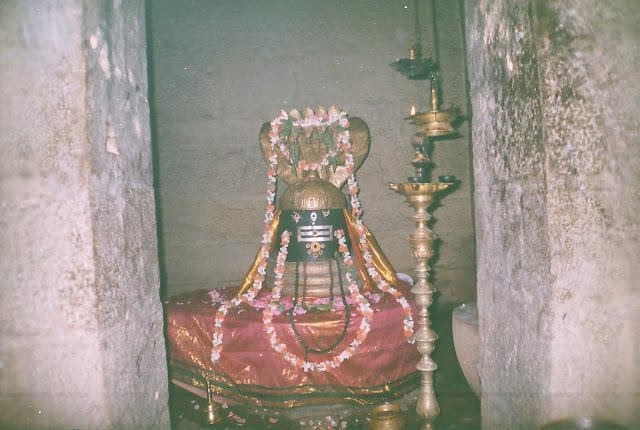
The Veerattaaneswarar Temple is a revered Padal Petra Sthalam (shrine glorified by the Nayanar saints) located on Damal Street in Kanchipuram. The presiding deity, Veerattaaneswarar, is a Swayambhu (self-manifested) Linga. Here, Lord Shiva is worshipped as the supreme vanquisher of the demon Kaalaagni Rudhrars.
Phalaśruti: The Benefits of Pilgrimage
Devotees flock to this temple for specific spiritual boons. According to Agamic traditions, worshipping Veerattaaneswarar bestows the following benefits:
- Overcoming Obstacles: As the “Hero of Valor,” the deity grants the strength to overcome life’s battles and internal demons.
- Cleansing Ancestral Karma: Performing rituals here is believed to alleviate Pitru Dosha (ancestral curses), bringing peace to forefathers.
- Spiritual Ascension: The temple is a powerful site for meditation, aiding in the attainment of Siddhis (supernatural powers) as achieved by the Siddhar Kongana.
2. Historical Origins & Scriptural Legend
The Legend of Veerattaneswarar
According to the Stala Purana (local oral tradition), the demon Kaalaagni Rudhrar, upon receiving a boon of near-invincibility, began tormenting the Devas and sages. Seeking refuge, they approached Lord Shiva. In a display of cosmic fury, Shiva opened his third eye to incinerate the demon. However, the destruction was so intense that Shiva began to dance uncontrollably with a terrifying laugh at this location in Kanchipuram to contain the energy. Thus, the Linga formed here is known as Veerattaaneswarar (The Lord of Valorous Dance).
Historical Context & Saints
While specific dynastic construction dates are not explicitly recorded in available stone inscriptions, the architectural style suggests origins in the Medieval Chola Period, with significant renovations during the Vijayanagara Empire (15th–16th century). The temple is historically significant due to the presence of Saakiyanaayanaar. Legend holds that this saint threw small stones at the Linga, imagining them as flowers (Manjal Poovu). Pleased by this unique devotion, Lord Shiva granted him liberation. The idol of this Nayanar is enshrined within the temple complex.
3. Architectural Marvels
Dravidian Style & Vastu Elements
The temple exemplifies the classical Dravidian architectural style. The structure is designed according to Vastu Shastra principles, ensuring the flow of energy aligns with the cardinal directions. The complex features a modest but potent Shikhara (tower) above the sanctum.
Sculptural Highlights
- The Sanctum Sanctorum: The main Linga is a natural stone formation, revered as Swayambhu.
- Nayanar shrine: A dedicated niche housing the idol of Saakiyanaayanaar, the saint who worshipped with stones.
- Parivara Devtas: A unique feature of this temple is the absence of traditional side deities. Tradition holds that the Parivara Devtas (attendant gods) fled in fear of Shiva’s cosmic dance. They are believed to exist here in Chitra Roopa (pictorial form) and Paadhuka Roopa (sandalwood slipper form), making them invisible to the naked eye.
Note on Heritage Status: While this specific temple is not a designated ASI protected monument, it is part of the living heritage network of Kanchipuram.
4. Darshan & Ritual Logistics (2026 Season)
To facilitate a smooth pilgrimage, the following timetable and seva details are provided. Please note that timings may vary slightly during festivals.
Daily Darshan Timings
| Session | Timing | Activity |
|---|---|---|
| Morning | 6:00 AM – 12:00 PM | Ushatkalam (Morning Pujas), Abhishekam |
| Afternoon | 12:00 PM – 4:00 PM | Temple Rest (Alankaram) |
| Evening | 4:00 PM – 8:00 PM | Arthajama Pooja (Evening Aarti) |
Key Sevas & Online Booking
- Abhishekam: Performed daily with water, milk, and sandalwood paste.
- Archana: Recitation of divine names. Tip: Use the official Tamil Nadu Hindu Religious and Charitable Endowments (HR&CE) website or app for online bookings. Search for “Veerattaaneswarar Temple Kanchipuram” under the Kanchipuram zone.
2026 Major Festivals at Kanchipuram Temples
While specific dates for this niche temple are set locally, pilgrims usually align visits with these grand Kanchipuram events:
- Aadi Perukku: August 2026 (Harvest Festival).
- Deepavali: October/November 2026 (Festival of Lights).
- Arudra Darshanam: December 2026 (Celebrating Shiva’s Cosmic Dance).
5. Practical Visitor Guidance
Dress Code & Etiquette
As with all ancient Shiva temples in Tamil Nadu, strict adherence to traditional dress is encouraged. Men should wear dhotis or trousers with shirts (no sleeveless vests). Women should wear sarees, salwar kameez, or long skirts.
Crowd Management & Seasonal Advice
- Best Hours: The ideal time for darshan is between 8:00 AM and 10:00 AM, avoiding the noon rush.
- Seasonal Tip: Kanchipuram can be extremely hot in May. Carry a water bottle, but consume it before entering the inner sanctum.
- Photography: Strictly prohibited inside the sanctum. Photography in the outer prakaram is generally allowed unless restricted by the temple administration.
- Accessibility: The temple flooring is ancient stone; wear comfortable, flat footwear. Slippers must be deposited at the designated counters outside.
6. Pilgrimage Connectivity
How to Reach Veerattaaneswarar Temple
- By Air: The nearest airport is Chennai International Airport (MAA), approximately 70 km away.
- By Rail: Kanchipuram Railway Station is the closest railhead (5 km from the temple). Alternatively, Chengalpattu Junction is 25 km away and well-connected.
- By Road: Kanchipuram is well-connected via NH 48 (connecting Chennai and Bangalore). Buses are frequent from Chennai Mofussil Bus Terminus (CMBT).
Nearby Sacred Sites (Pilgrimage Circuit)
Extend your spiritual journey with these nearby temples:
- Ekambareswarar Temple: Located 2 km away. Dedicated to Shiva as Earth (Prithvi).
- Kamakshi Amman Temple: 3 km away. The seat of the Goddess Parvati in the form of a yantra.
- Ulagalantha Perumal Temple: 2.5 km away. Dedicated to Vishnu, completing the Pancha Bhoota and Vaishnava circuit of Kanchipuram.
7. Frequently Asked Questions (FAQ)
Is there a VIP Darshan entry?
Yes, the temple administration provides a special darshan queue for senior citizens, differently-abled devotees, and those who have booked specific Sevas (like Abhishekam) in advance.
What is the significance of the “invisible” deities here?
Unlike other temples where deities stand beside the main shrine, the Veerattaaneswarar Temple holds that the attendant gods fled due to the intensity of Shiva’s dance. They are worshipped in symbolic or abstract forms (Chitra Roopa).
Are there accommodation facilities nearby?
Yes. The Kanchipuram TTDC (Tamil Nadu Tourism Development Corporation) Hotel is nearby. Additionally, private guest houses run by temple trusts are available on the temple street.
Can I perform last rites or Shradh here?
While primarily a Shiva temple, it is a powerful site for ancestral rituals. However, for specific Shradh ceremonies, the priests usually recommend the Vishnu temples in Kanchipuram, though worship to Shiva here also aids in ancestral peace.
What is the best time of year to visit Kanchipuram?
October to March offers the most pleasant weather. The Margazhi festival (December–January) offers a unique cultural experience with Carnatic music concerts across the town.
Recent Posts

Shri Kaamkoteeshwar Mandir, Varanasi – History & Significance
In the heart of Kashi, the eternal city of Lord Shiva, where the Ganges flows with celestial grace, stands the Shri Kaamkoteeshwar Mandir. This sacred Sannidhi is not merely a temple but a profound spiritual bridge between the Northern…

ओ सांवरे तूने ही मुझको संभाला – Lyrics & Meaning
ओ सांवरे तूने ही मुझको संभाला – A Prayer to Shyam Origin & Spiritual Essence Why This Bhajan Resonates Devotees chant this when overwhelmed by life’s storms—the refrain ‘तूने ही मुझको संभाला’ is the soul’s sigh of relief: “You…

कथा ये है महाराज मेरे की – Lyrics & Meaning
कथा ये है महाराज मेरे की छत्रपति संभाजी महाराज – A Prayer to Chhatrapati Sambhaji Maharaj Origin & Spiritual Essence Why This Bhajan Resonates Devotees chant this when their spirit feels tested—its powerful refrain “महाराज मेरे” is a soul’s…

Rigveda Samhita Yathartha Anuvada (ऋग्वेद संहिता यथार्थ अनुवाद) – Complete Set with Anvayartha & Hindi/English Translation
The Rigveda is the oldest surviving scripture of humanity and the foundational text of Sanātana Dharma. For serious students, scholars, UPSC aspirants studying ancient Indian history, Sanskrit learners, and spiritual seekers, a precise and grammatically structured translation is indispensable.…

आना भी अकेला है जाना भी अकेला है – Lyrics & Meaning | BharatTemples
आना भी अकेला है जाना भी अकेला है – A Prayer to the Divine Witness Origin & Spiritual Essence Why This Bhajan Resonates Devotees turn to this bhajan in moments of deep reflection—when life’s attachments begin to ache. The…

माता शेरावाली के द्वार जो भी जाता है – Lyrics & Meaning
माता शेरावाली के द्वार जो भी जाता है – A Prayer to Maa Sherawali Origin & Spiritual Essence Why This Bhajan Resonates Devotees turn to this bhajan in times of fear or uncertainty—its promise that no one leaves Maa’s…

मार लेना सपणी उबार लेणा भवरा – Lyrics & Meaning
मार लेना सपणी उबार लेणा भवरा – A Prayer to the Divine Beloved Origin & Spiritual Essence Why This Bhajan Resonates Devotees chant this in moments of deep vulnerability—its cry of “मार लेना सपणी, उबार लेणा भवरा” is the…

हमें श्याम सुंदर भरोसा तुम्हारा – Lyrics & Meaning
हमें श्याम सुंदर भरोसा तुम्हारा – A Prayer to Shyam Sundar Origin & Spiritual Essence Why This Bhajan Resonates Devotees chant this when feeling alone—its refrain ‘de do sahara’ is the soul’s cry for divine support. Lyrics in Hindi…

Mere Satguru Ne Di Thi Davai Lyrics in Hindi & Meaning
Mere Satguru Ne Di Thi Davai: Invoking the Guru’s Liberating Wisdom This soul-stirring bhajan venerates the Satguru (True Spiritual Master) as the divine physician who dispenses the only remedy for life’s deepest sufferings. Composed by Sant Karmaveer Tufani, it…

Janm Diyo Thari Maa Dukh Dekhiyo Lyrics in Hindi & Meaning
जन्म दियो थारी माँ दुख देखियो (Maa’s Grief Upon Birthing You) This soul-stirring Chetavani Bhajan (admonitory hymn) is addressed to the Divine Mother (Maa) – a call for repentance when children forget their filial duties in the dark age…