Adi Shankaracharya: Life, Philosophy (Advaita Vedanta) & Works
Receive daily temple updates, divine darshan, and morning bhajans directly on WhatsApp.
Contents
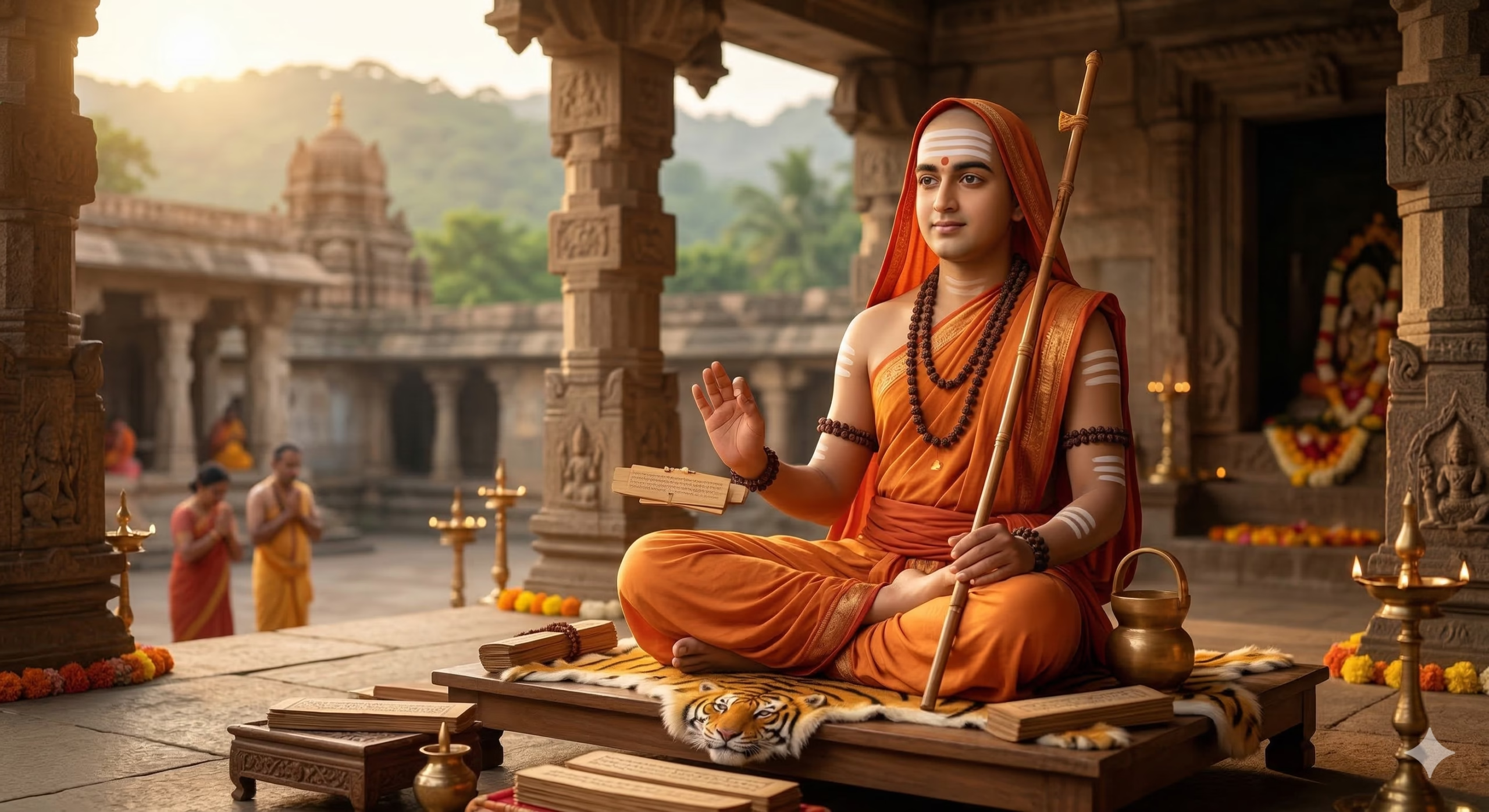
Adi Shankaracharya was a towering 8th-century Indian philosopher, theologian, and the primary exponent of the Advaita Vedanta school of thought. Born in Kalady, Kerala, he is revered as one of the most influential spiritual leaders in Indian history.
He is widely credited with consolidating the doctrine of non-dualism (Advaita) and unifying the diverse strands of Hindu thought during a critical period. As the founder of the Dashanami monastic order and the Advaita Matha tradition, his influence remains the bedrock of modern Hindu philosophy.
Journey of a Philosopher-Saint
Shankaracharya traveled the length and breadth of the Indian subcontinent, engaging in profound debates with scholars from various philosophical schools. His mission was not just to teach, but to integrate the spiritual fabric of India. To ensure the longevity of his teachings, he established four principal Mathas (monasteries) in the four corners of India:
- Sringeri Sharada Peetham (South)
- Dwaraka Sharada Peetham (West)
- Govardhana Matha, Puri (East)
- Jyotirmath, Badrinath (North)
Notable Works of Adi Shankaracharya
Adi Shankaracharya’s literary contributions are vast, ranging from complex philosophical commentaries (Bhashyas) to soul-stirring devotional poetry (Stotrams).
Philosophical Commentaries
- Brahmasutra-Bhashya: His masterpiece commentary on the Brahma Sutras. It remains the definitive text for understanding the Advaita Vedanta tradition.
- Bhagavad Gita Bhashya: A profound interpretation of the Gita, explaining the path to self-realization through the synthesis of Jnana (knowledge), Bhakti (devotion), and Karma (action).
- Upanishad Bhashyas: Detailed commentaries on the major Upanishads that clarify the nature of the ultimate reality.
📖 Related: ओ श्याम जी हमें ना भुलाना भजन Lyrics, Video, Bhajan, Bhakti Songs
Original Treatises & Hymns
- Upadeshasahasri: A pedagogical work using a question-answer format to teach the essence of non-dualism.
- Atma Bodha (Self-Knowledge): A foundational primer that uses simple metaphors to explain the nature of the Soul and the path to liberation.
- Soundarya Lahari: A collection of 100 verses praising the beauty and grace of Goddess Parvati (Tripura Sundari), blending poetry with Tantric philosophy.
- Kanakadhara Stotram: A powerful hymn dedicated to Goddess Lakshmi. Legend says that when Shankara recited this, the Goddess showered golden amlas to help a poor woman.
Frequently Asked Questions (FAQs)
What is the core philosophy of Adi Shankaracharya?
The core of his teaching is Advaita Vedanta, which teaches the non-dual nature of reality. It posits that the individual self (Atman) and the supreme reality (Brahman) are one and the same (Aham Brahmasmi).
Where are the four Mathas established by Adi Shankaracharya located?
To preserve the Vedas, he established four monasteries:
South: Sringeri (Karnataka)
West: Dwarka (Gujarat)
East: Puri (Odisha)
North: Jyotirmath (Uttarakhand)
Why is Adi Shankaracharya called “Shanmata Sthapanacharya”?
He is credited with streamlining Hindu worship into six major traditions (Shanmata): Ganapatyam, Saivism, Vaishnavism, Shaktism, Sauram, and Kaumaram, promoting harmony among different sects.
What is the significance of the Kanakadhara Stotram?
The Kanakadhara Stotram is a prayer to Goddess Lakshmi for prosperity. It is widely recited by devotees during Diwali and other auspicious occasions to seek blessings for spiritual and material wealth.
When and where was Adi Shankaracharya born?
He was born in the 8th century CE (traditionally 788–820 CE) in a village called Kalady in present-day Kerala, India.
📖 Related: ओ ठाकुर प्यारे भजन Lyrics, Video, Bhajan, Bhakti Songs