
Contents
- 1 Annapurna Devi Temple, Varanasi: The Divine Kitchen of Kashi
- 1.1 1. Introduction & Spiritual Essence
- 1.2 2. Historical Origins & Scriptural Legend
- 1.3 3. Architectural Marvels
- 1.4 4. Darshan & Ritual Logistics
- 1.5 5. Practical Visitor Guidance
- 1.6 6. Pilgrimage Connectivity
- 1.7 7. Frequently Asked Questions (FAQ)
- 1.8 Photo Gallery
- 1.9 Architecture
- 1.10 Legend / Local stories
- 1.11 How to Reach
- 1.12 Contact Details
Annapurna Devi Temple, Varanasi: The Divine Kitchen of Kashi
Welcome to the spiritual heart of Kashi Varanasi, where the goddess of nourishment, Devi Annapurna, presides as the eternal provider. As the Lead Heritage Architect at BharatTemples.com, I invite you to explore this definitive guide to one of India’s most sacred Shakti Peethas. This article is engineered for devotees and pilgrims seeking a profound connection with the divine mother.
1. Introduction & Spiritual Essence
The Annapurna Devi Temple, located in the bustling Vishwanath Gali of Varanasi, is dedicated to Annapurna (Sanskrit: अन्नपूर्णा), the Hindu goddess of food and nourishment. She is considered an incarnation of Parvati (the consort of Lord Shiva) and represents the ultimate form of Prakriti (nature) that sustains life.
The Phalaśruti: Benefits of Devotion
According to the sacred Kashi Khand of the Skanda Purana, devotees who worship Annapurna are believed to receive the merit of worshipping all deities in the universe. The scriptural promise is profound:
- Removal of Poverty: Worshipping the goddess with clothes, flowers, and lamps is believed to grant prosperity and remove all material obstacles.
- Cleansing Ancestral Karma: Circumambulating (Pradakshina) the deity 108 times during the Chaitra month is said to purify the sins of ancestors.
- Universal Satisfaction: It is believed that feeding the body in Kashi without worshipping Annapurna is incomplete; she ensures that no devotee in the holy city ever goes hungry.
2. Historical Origins & Scriptural Legend
While the spiritual roots of Annapurna worship date back millennia, the current structure of the temple has a specific historical timeline.
According to temple records and historical inscriptions:
- Construction Date: The temple was built in 1729 CE by the Maratha Holkar Dynasty. Jayaji Rao Scindia (Rani Ahilyabai Holkar’s contemporary) contributed significantly to the construction of the temple complex in Varanasi.
- Architectural Style: The structure displays a beautiful blend of Dravidian architectural elements, distinct from the North Indian Nagara style prevalent in the region, reflecting the patronage of South Indian dynasties.
Scriptural Legend: The Descent of Maa Annapurna
Tradition holds that once, Lord Shiva philosophically argued that the material world (Maya) was an illusion. To prove the necessity of matter for sustenance, Devi Parvati disappeared, plunging Kashi into darkness and starvation.
Realizing his error, Lord Shiva came to Kashi as a beggar seeking alms. Devi Parvati reappeared in the form of Annapurna (the one with a full bowl of food) at the Visheshwarganj (current location) and fed Shiva, thus restoring balance to the universe. The temple marks this divine event.
3. Architectural Marvels
The Annapurna Math Mandir is a testament to the Dravidian style of architecture, characterized by its towering Shikhara (spire) and intricate carvings.
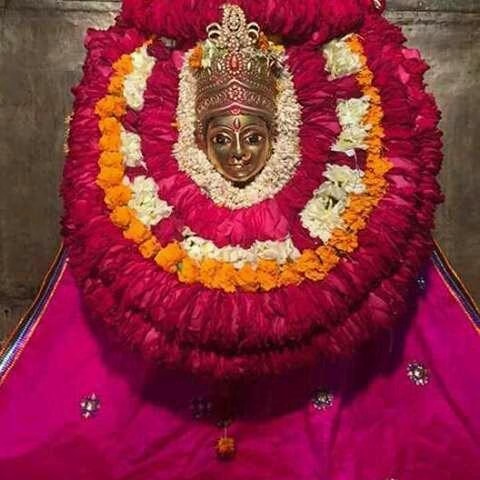
- The Sanctum (Garbhagriha): The innermost shrine houses the black stone idol of Annapurna Devi, holding a cooking ladle (Khadga) and a bowl (Kamandalu).
- Mandapas: The temple features pillared halls that allow devotees to gather for prayers and Bhajans. The marble flooring is maintained meticulously by the administration.
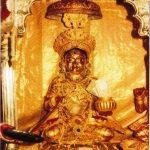
- The Golden Idol: A unique feature of this temple is the Golden Annapurna idol. Every year, during Deepavali (Diwali), this golden idol is moved to the upper floor of the temple for special darshan. This is a major attraction for South Indian devotees who combine their Kashi Yatra with Ganga Snan and Vishwanath Darshan during this time.
4. Darshan & Ritual Logistics
Visiting the temple requires adherence to specific timings and ritual protocols. The atmosphere shifts from the quiet morning prayers to the vibrant evening Aarti.
Daily Darshan Timings (2026 Schedule)
| Session | Timing | Activity |
|---|---|---|
| Morning | 5:00 AM – 12:00 PM | Mangala Aarti & General Darshan |
| Afternoon | 12:00 PM – 4:00 PM | Bhog Offering & Temple Cleaning |
| Evening | 4:00 PM – 11:00 PM | Sandhya Aarti & Closing |
*Note: Timings may vary slightly during major festivals. The temple generally opens after Mangala Aarti and closes after Shayan Aarti.
Key Sevas & Online Booking
Devotees can book specific rituals in advance. In 2026, the temple administration encourages digital donations to avoid queues.
- Abhishekam: Ritual bathing of the deity (usually performed with milk, honey, and ghee).
- Annadanam: The offering of food, considered the highest virtue in this temple.
- Online Seva Booking: Visit the official Varanasi temple trust websites or platforms like bharattemples.com to book Sevas. Look for “Annapurna Seva” sections in the checkout process.
2026 Major Festival Dates
- Navratri (Chaitra): April 2026 (Vasant Navratri) – Special Mahagauri Puja on the 8th day.
- Annapurna Jayanti: November 2026 (Margashirsha Shukla Paksha).
- Deepavali (Diwali): October/November 2026. Special Event: Display of the Golden Annapurna Idol for 4 days.
- Annakut: The day after Diwali – Massive offering of food varieties to the deity.
5. Practical Visitor Guidance
Visiting Varanasi, particularly the Vishwanath Gali, requires preparation. The lanes are narrow, and crowds are dense.
- Dress Code: Traditional Indian attire is recommended. Men should wear dhoti/kurta, and women should wear sarees or salwar kameez. Avoid western casuals.
- Photography: Strictly prohibited inside the inner sanctum. Photography in the outer mandapas may be permitted but respect the privacy of worshippers.
- Mobile & Lockers: Electronic items (phones, cameras) are often restricted at the entrance. Use the free mobile lockers provided at designated checkpoints near Vishwanath Gali entry points.
- Crowd Management:
- Best Time: 5:00 AM – 7:00 AM (Morning) or 8:00 PM (Night).
- Seasonal Advice: Summers (May-June) in Varanasi are scorching. Carry a water bottle and cover your head. Winters (Dec-Jan) are pleasant but foggy.
6. Pilgrimage Connectivity
The temple is situated in the heart of the old city. Navigation can be complex due to the non-motorable narrow lanes.
How to Reach
- Nearest Airport: Lal Bahadur Shastri International Airport (VNS) (approx. 25 km). Taxis and E-rickshaws are available to drop you at Dashashwamedh Gate.
- Nearest Railway Station: Varanasi Junction (BSB) (approx. 5 km). Auto-rickshaws can take you to Godowlia or Dashashwamedh.
- By Road: The temple connects via NH-19 (formerly NH-2). From the main highway, proceed towards Dashashwamedh Road or Godowlia.
Nearby Sacred Sites (Pilgrimage Circuit)
- Kashi Vishwanath Temple: Located just a 5-minute walk through Vishwanath Gali. Essential for every pilgrim.
- Sankat Mochan Hanuman Temple: Located approx. 3 km away. Famous for relieving devotees from troubles.
- Durga Temple (Monkey Temple): Located in the Durga Kund area (approx. 4 km). A vibrant red temple dedicated to Goddess Durga.
7. Frequently Asked Questions (FAQ)
Is there a VIP darshan entry at Annapurna Devi Temple?
While the temple administration does not always advertise a formal “VIP” pass, early morning entry is generally smoother. During peak festivals, special passes may be issued by the Varanasi Police or Temple Trust for elderly and differently-abled devotees.
What is the significance of the Golden Annapurna idol?
The Golden Annapurna is the center of attraction during Diwali. Legend says the original idol was lost, and the current gold-plated idol was established to honor the divine mother’s feeding of Lord Shiva. It is paraded for four days during Deepavali.
Mahagauri is the eighth form of Durga. In the context of Kashi, Annapurna is considered the manifestation of Mahagauri. Devotees worship her on the 8th day (Maha Ashtami) of Navratri.
Can I carry Prasad inside the temple?
Generally, outside food is not allowed inside the sanctum. However, you can purchase Prasad (offerings) from authorized stalls outside the temple or participate in the temple’s Annadanam (free food distribution) scheme.
What are the contact details for the temple?
Address: Annapurna Math Mandir, D 9/1, Vishwanath Gali, Godowlia, Varanasi, Uttar Pradesh 221001.
Phone: 0542 239 2619 (Subject to change; verify locally).
Photo Gallery
Architecture
The temple features Dravidian architectural elements, characterized by a towering shikhara and pillared mandapas. The exterior is adorned with intricate carvings typical of South Indian temple styles.
Legend / Local stories
Local folklore narrates the story of Devi Annapurna feeding Lord Shiva, symbolizing the importance of material sustenance in the spiritual journey. Another legend highlights the fairness (Gauri) attained by Parvati after bathing in the Ganges.
How to Reach
Annapurna Devi is located at D-9/1, Annapurna Temple. The narrow lane or Gully approaching the temple is known as Vishwanath Gully.
There are three approach lanes one via Dashashwamedh Road, second via Bansphatak and third via Gyanvapi. Since the temple is located in deep Gully, it is advisable to visit the temple along with a local person or Guide.
Contact Details
Official Address: Annapurna Math Mandir, D 9/1, Vishwanath Gali, Godowlia, Varanasi, Uttar Pradesh 221001
Recent Posts

Shri Kaamkoteeshwar Mandir, Varanasi – History & Significance
In the heart of Kashi, the eternal city of Lord Shiva, where the Ganges flows with celestial grace, stands the Shri Kaamkoteeshwar Mandir. This sacred Sannidhi is not merely a temple but a profound spiritual bridge between the Northern…

ओ सांवरे तूने ही मुझको संभाला – Lyrics & Meaning
ओ सांवरे तूने ही मुझको संभाला – A Prayer to Shyam Origin & Spiritual Essence Why This Bhajan Resonates Devotees chant this when overwhelmed by life’s storms—the refrain ‘तूने ही मुझको संभाला’ is the soul’s sigh of relief: “You…

कथा ये है महाराज मेरे की – Lyrics & Meaning
कथा ये है महाराज मेरे की छत्रपति संभाजी महाराज – A Prayer to Chhatrapati Sambhaji Maharaj Origin & Spiritual Essence Why This Bhajan Resonates Devotees chant this when their spirit feels tested—its powerful refrain “महाराज मेरे” is a soul’s…

Rigveda Samhita Yathartha Anuvada (ऋग्वेद संहिता यथार्थ अनुवाद) – Complete Set with Anvayartha & Hindi/English Translation
The Rigveda is the oldest surviving scripture of humanity and the foundational text of Sanātana Dharma. For serious students, scholars, UPSC aspirants studying ancient Indian history, Sanskrit learners, and spiritual seekers, a precise and grammatically structured translation is indispensable.…

आना भी अकेला है जाना भी अकेला है – Lyrics & Meaning | BharatTemples
आना भी अकेला है जाना भी अकेला है – A Prayer to the Divine Witness Origin & Spiritual Essence Why This Bhajan Resonates Devotees turn to this bhajan in moments of deep reflection—when life’s attachments begin to ache. The…

माता शेरावाली के द्वार जो भी जाता है – Lyrics & Meaning
माता शेरावाली के द्वार जो भी जाता है – A Prayer to Maa Sherawali Origin & Spiritual Essence Why This Bhajan Resonates Devotees turn to this bhajan in times of fear or uncertainty—its promise that no one leaves Maa’s…

मार लेना सपणी उबार लेणा भवरा – Lyrics & Meaning
मार लेना सपणी उबार लेणा भवरा – A Prayer to the Divine Beloved Origin & Spiritual Essence Why This Bhajan Resonates Devotees chant this in moments of deep vulnerability—its cry of “मार लेना सपणी, उबार लेणा भवरा” is the…

हमें श्याम सुंदर भरोसा तुम्हारा – Lyrics & Meaning
हमें श्याम सुंदर भरोसा तुम्हारा – A Prayer to Shyam Sundar Origin & Spiritual Essence Why This Bhajan Resonates Devotees chant this when feeling alone—its refrain ‘de do sahara’ is the soul’s cry for divine support. Lyrics in Hindi…

Mere Satguru Ne Di Thi Davai Lyrics in Hindi & Meaning
Mere Satguru Ne Di Thi Davai: Invoking the Guru’s Liberating Wisdom This soul-stirring bhajan venerates the Satguru (True Spiritual Master) as the divine physician who dispenses the only remedy for life’s deepest sufferings. Composed by Sant Karmaveer Tufani, it…

Janm Diyo Thari Maa Dukh Dekhiyo Lyrics in Hindi & Meaning
जन्म दियो थारी माँ दुख देखियो (Maa’s Grief Upon Birthing You) This soul-stirring Chetavani Bhajan (admonitory hymn) is addressed to the Divine Mother (Maa) – a call for repentance when children forget their filial duties in the dark age…