Atyugra Narsimha Temple Varanasi: History, Timings & Darshan Guide
Receive daily temple updates, divine darshan, and morning bhajans directly on WhatsApp.
Contents
- 1 1. Introduction & Spiritual Essence
- 2 2. Historical Origins & Scriptural Legend
- 3 3. Architectural Marvels
- 4 4. Darshan & Ritual Logistics
- 5 5. Practical Visitor Guidance
- 6 6. Pilgrimage Connectivity
- 7 7. Frequently Asked Questions (FAQ)
- 8 Photo Gallery
Welcome to the definitive pilgrimage guide for the Atyugra Narsimha Temple in Varanasi. Nestled in the sacred locality of Gomath, just north of the revered Kamleshwar Mahadev, this temple houses Lord Vishnu in his fierce, yet protective avatar.
1. Introduction & Spiritual Essence
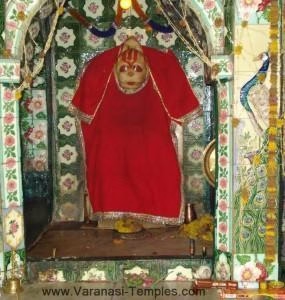
The Atyugra Narsimha Temple is dedicated to Lord Vishnu, who appeared as half-lion, half-man to protect his devotee Prahlad and destroy tyranny. The name “Atyugra” is derived from two Sanskrit words: Ati (Extreme) and Ugra (Fierce). This signifies the boundless and ferocious power the Lord possesses to vanquish evil.
Phalaśruti: The Spiritual Benefits
According to temple records and the oral tradition of Kashi, devotees visiting this shrine experience profound spiritual cleansing. As explained in the local Sthala Purana:
- Cleansing of Ancestral Karma: It is believed that offering prayers here helps in pacifying the wrath of Nagas (serpent deities) and removing Pitra Dosha (ancestral flaws).
- Removal of Fear: As the Lord of Supreme Fierceness, he destroys fear, protecting devotees from enemies and negative energies.
- Moksha: Being located in Varanasi, the abode of liberation, worshipping here aids in the soul’s journey toward Moksha (liberation).
📖 Related: Hatkeshwar Temple Varanasi: History, Timings & Darshan Guide
2. Historical Origins & Scriptural Legend
While the exact date of construction remains a mystery covered by the mists of time, the architecture and stone work suggest origins in the medieval period. Varanasi has seen numerous temple constructions and reconstructions over centuries, particularly during the Maratha and Maratha-influenced eras.
The Legend of Atyugra
Tradition holds that Lord Vishnu resides here in the form he assumed to subdue the demon king Hiranyakashipu. Unlike other depictions, the “Atyugra” (supremely fierce) aspect highlights the moment of the slaying—a visceral reminder of the victory of righteousness (Dharma) over Adharma. Devotees believe that the energy of this event is palpable in the sanctum.
3. Architectural Marvels
The temple represents a traditional Hindu Temple architecture style common in the Kashi region. It is a compact but spiritually potent shrine, typical of the dense urban fabric of Varanasi.
- The Sanctum (Garbhagriha): The inner sanctum houses the deity facing east. The idol is carved from dark stone, emphasizing the Lord’s formidable nature.
- Surroundings: Located in the Gomath locality, the temple is adjacent to the Kamleshwar Siva shrine. This proximity highlights the syncretic nature of Shaivism and Vaishnavism in Varanasi.
- Sculptural Details: Though compact, the temple façade may feature intricate carvings typical of North Indian architecture, often featuring motifs of lotus, conch, and Sudarshan Chakra.
4. Darshan & Ritual Logistics
The temple follows a traditional schedule allowing devotees to offer prayers during the auspicious hours of the day. Note: As of 2026, these timings are subject to local festivities and seasonal adjustments.
Daily Darshan Timings
| Session | Timings |
|---|---|
| Morning Darshan | 06:00 AM – 10:00 AM |
| Afternoon Break | 10:00 AM – 04:00 PM |
| Evening Darshan | 04:00 PM – 10:00 PM |
📖 Related: Adi Keshav Temple Varanasi: History, Darshan Timings & Guide
Sevas and Booking
At this shrine, the tradition emphasizes personal devotion. Devotees can perform Pooja by their own hands.
- Offerings: Traditional offerings include Tulsi leaves, flowers, and incense.
- Online Seva Booking: While many larger temples in Varanasi offer online bookings, this specific ancient shrine operates largely on a walk-in basis. For special Abhishekam, it is recommended to consult the temple priest on arrival.
2026 Festival Dates
- Narasimha Jayanti: Tuesday, May 13, 2026. (Special alankaram and evening procession expected).
- Nag Panchami: Sunday, July 27, 2026. (Highly significant for this shrine due to the protective aspect against Nagas).
- Diwali: Tuesday, October 21, 2026. (Deep Daan and special evening aarti).
5. Practical Visitor Guidance
Visiting the Atyugra Narsimha Temple involves navigating the narrow, winding lanes of Old Varanasi.
-
Dress Code: Modest clothing is mandatory. Shoulders and knees must be covered. Traditional Indian attire (Kurta-Pajama/Saree) is recommended.
-
Photography: Strictly prohibited inside the sanctum. Photography may be allowed in the outer courtyard, but always seek permission.
-
Electronics: Mobile phones are generally allowed but should be kept on silent. Photography with phones inside the sanctum is prohibited.
-
Crowd Management: The lanes of Gomath are narrow.
-
Best Time: Visit between 6:00 AM and 7:30 AM for a peaceful darshan.
-
Seasonal Advice: Summers (May-June) are very hot in Varanasi; carry a water bottle and wear cotton clothing. Monsoon (July-August) requires waterproof footwear.
6. Pilgrimage Connectivity
The temple is situated in the heart of the ancient city.
How to Reach
- Nearest Airport: Lal Bahadur Shastri International Airport (LBS), Varanasi (approx. 30-40 mins by taxi).
- Nearest Railway Station: Varanasi Junction (BSB) or Kashi Vishwanath Temple (KVT) Cantt. Station.
- By Road: From Varanasi Junction, take a taxi to Chowk. From Chowk, the temple is accessible by foot through the narrow heritage lanes of Gomath.
- Local Transport: Auto-rickshaws can take you up to Chowk, but further entry is restricted to foot/e-rickshaws due to lane width.
**
📖 Related: Sarnath Temple History and Darshan Timings: Complete Guide
Nearby Sacred Sites (Pilgrimage Circuit)
- Kamleshwar Mahadev: Located immediately adjacent. One of the 12 Jyotirlingas (conjectured by some scholars).
- Kashi Vishwanath Temple: The primary landmark of Varanasi, approximately 1 km away (walking distance).
- Sankat Mochan Hanuman Temple: Located further south, accessible by vehicle.
7. Frequently Asked Questions (FAQ)
1. Is there a VIP darshan entry at Atyugra Narsimha Temple?
No, this is a heritage shrine with a traditional setup. There is no formal VIP entry; all devotees are treated equally and entry is based on queue management.
2. Can non-Hindus visit the temple?
Varanasi temples generally follow traditional restrictions. It is advisable to check with local authorities or the temple priest before entry if you are not of the Hindu faith.
3. What is the significance of the name “Atyugra”?
It translates to “Extremely Fierce.” It signifies Lord Narsimha’s terrifying form assumed to kill the demon Hiranyakashipu, symbolizing the destruction of ego and evil.
4. Is there parking available near the temple?
No, vehicles cannot enter the Gomath locality. Visitors must park their vehicles at the designated parking lots near Chowk or Dashashwamedh Ghat and walk to the temple.
5. Are there restaurants nearby?
Yes, the area around Chowk and Gomath offers traditional Banarasi street food and sweet shops. However, dining facilities are not available inside the temple premises.
Photo Gallery
Explore the divine architecture and serene atmosphere of the Atyugra Narsimha Temple through these curated images.
Atyugra-Narsimha2-285×300, Atyugra Narsimha Temple, Varanasi
**