Bhagavad Gita: Chapter 2, Verse 11
Receive daily temple updates, divine darshan, and morning bhajans directly on WhatsApp.
Contents
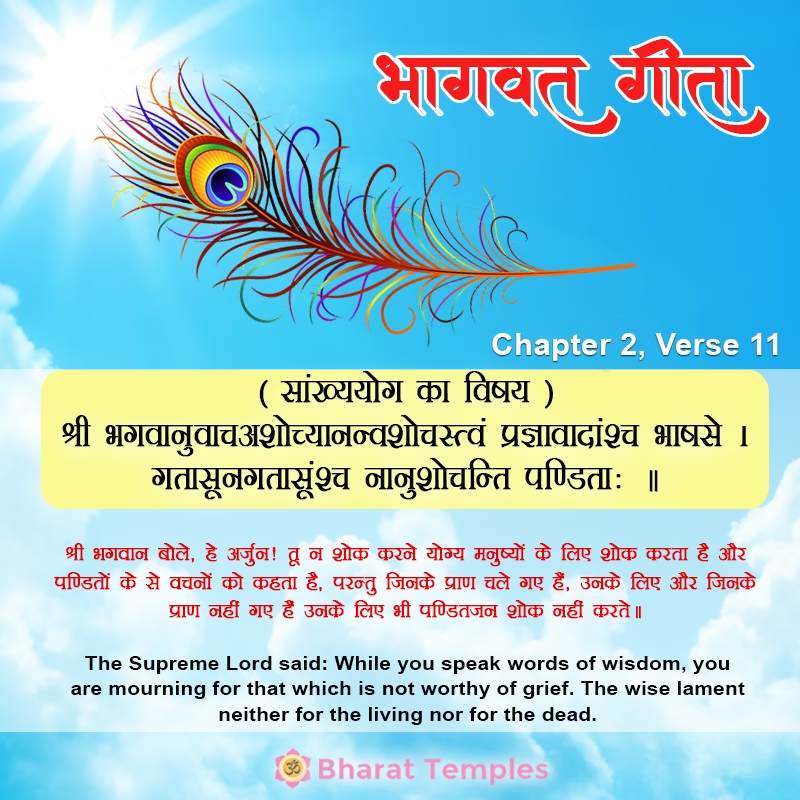
Chapter 2, Verse 11
श्रीभगवानुवाच |
अशोच्यानन्वशोचस्त्वं प्रज्ञावादांश्च भाषसे |
गतासूनगतासूंश्च नानुशोचन्ति पण्डिता: || 2.11 ||
śhrī bhagavān uvācha
aśhochyān-anvaśhochas-tvaṁ prajñā-vādānśh cha bhāṣhase
gatāsūn-agatāsūnśh-cha nānuśhochanti paṇḍitāḥ
भावार्थ:
श्री भगवान बोले, हे अर्जुन! तू न शोक करने योग्य मनुष्यों के लिए शोक करता है और पण्डितों के से वचनों को कहता है, परन्तु जिनके प्राण चले गए हैं, उनके लिए और जिनके प्राण नहीं गए हैं उनके लिए भी पण्डितजन शोक नहीं करते॥11॥
Translation
The Supreme Lord said: While you speak words of wisdom, you are mourning for that which is not worthy of grief. The wise lament neither for the living nor for the dead.
Explanation in English:
In this very first verse of His teachings, Krishna directly addresses Arjuna’s confusion and sorrow—but also gently corrects him.
Let’s break it down:
- “Aśocyān anvaśocas tvaṁ” – “You are grieving for those who are not to be grieved for.”
Krishna says Arjuna’s sorrow is misplaced. Those for whom he grieves (like Bhishma and Drona) are eternal souls, not merely their physical bodies. - “Prajñā-vādāṁś ca bhāṣase” – “Yet you speak words of wisdom.”
Arjuna sounds philosophical, talking about dharma and morality, but his emotions are clouding his judgment. Krishna calls out this contradiction. - “Gatāsūn agatāsūṁś ca” – “For both the dead and the living…”
This refers to those whose life force (prāṇa) has left (dead) and those whose prāṇa remains (living). - “Nānuśocanti paṇḍitāḥ” – “…the wise do not grieve.”
A wise person (paṇḍita) understands the eternal nature of the soul and doesn’t get overwhelmed by death or loss.
📖 Related: Bhagavad Gita: Chapter 2, Verse 28
Key Teaching:
This verse introduces the core message of the Gita:
The soul is eternal. The wise do not grieve for that which is temporary—be it life or death.
Krishna is urging Arjuna to rise above emotional attachment, and begin to see reality with spiritual clarity, not just human sentiment.