Bhagavad Gita: Chapter 2, Verse 13
Receive daily temple updates, divine darshan, and morning bhajans directly on WhatsApp.
Contents
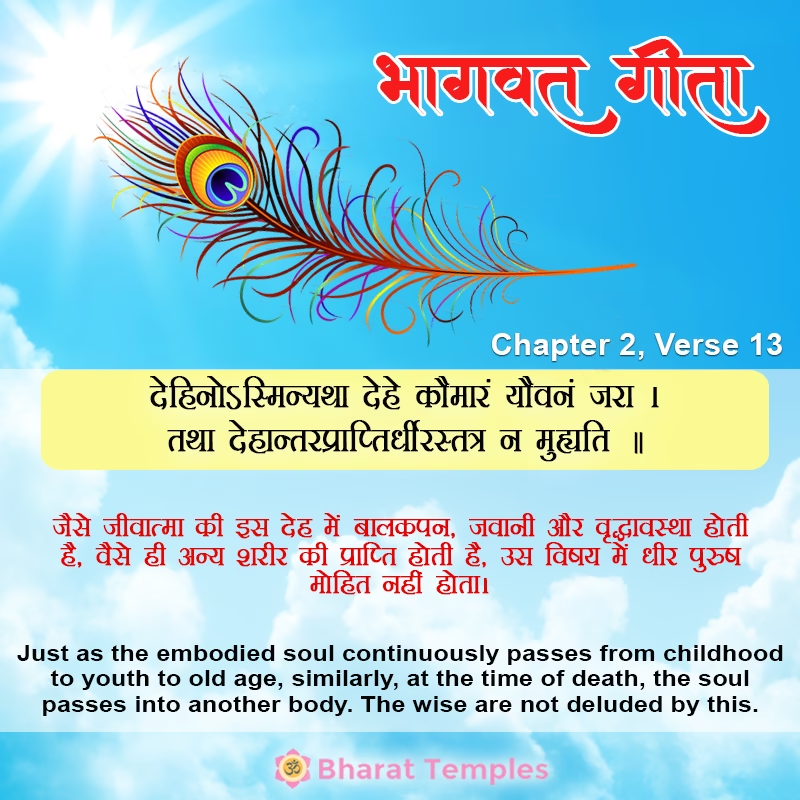
Chapter 2, Verse 13
देहिनोऽस्मिन्यथा देहे कौमारं यौवनं जरा |
तथा देहान्तरप्राप्तिर्धीरस्तत्र न मुह्यति || 2.13 ||
dehino ’smin yathā dehe kaumāraṁ yauvanaṁ jarā
tathā dehāntara-prāptir dhīras tatra na muhyati
भावार्थ:
जैसे जीवात्मा की इस देह में बालकपन, जवानी और वृद्धावस्था होती है, वैसे ही अन्य शरीर की प्राप्ति होती है, उस विषय में धीर पुरुष मोहित नहीं होता।13॥
Translation
Just as the embodied soul continuously passes from childhood to youth to old age, similarly, at the time of death, the soul passes into another body. The wise are not deluded by this.
Explanation in English:
This verse continues Krishna’s teaching on the eternal nature of the soul (ātman) and the temporary nature of the body.
Let’s break it down:
- “Dehino ’smin yathā dehe…” – “As in this body, the soul experiences childhood, youth, and old age…”
We all observe that while the body changes over time, we still feel like the same “I” inside — the self remains constant. - “Tathā dehāntara-prāptiḥ” – “In the same way, the soul acquires another body after death.”
Just as we naturally accept physical changes in life, death is simply another change — the soul moves to a new body. - “Dhīraḥ tatra na muhyati” – “The wise are not bewildered by this.”
A wise person (dhīra), who understands the nature of the self, does not grieve over bodily death or transformation.
📖 Related: Bhagavad Gita: Chapter 1, Verse 37
Key Teaching:
This verse introduces the idea of reincarnation and emphasizes that:
- The soul is unchanging, while the body is perishable.
- Just as we move from one stage of life to another, death is simply a transition to another body.
Summary:
“The soul goes through many stages within one body and then moves on to another. Those who truly understand this truth are not disturbed by death or aging.”
Krishna is helping Arjuna see beyond the physical and realize the spiritual continuity of life, which is essential for understanding dharma and detachment.