
Contents
Chateshwar Temple, Cuttack: A Definitive Pilgrimage Guide
By the Lead Heritage Architect & SEO Strategist at BharatTemples.com
Introduction & Spiritual Essence
Nestled in the quiet embrace of the Krushnapur village near Bahugram, the Chateshwar Temple stands as a testament to Odisha’s timeless spiritual heritage. While the bustling city of Cuttack thrives nearby, this ancient sanctuary offers a profound connection to the divine, rooted deeply in the Shaivite tradition.
The temple is dedicated to Lord Shiva, enshrined as a Patalaphuta Shivalinga. This unique form of the Lingam, resting within a circular Yonipitha (base), symbolizes the infinite and formless nature of the Supreme Being. Unlike monolithic structures, the Patalaphuta Lingam is believed to be a living energy source, radiating serenity and spiritual power.
Phalaśruti (Spiritual Benefits): Devotees flock to Chateshwar Temple for various reasons. Tradition holds that a sincere darshan (sacred viewing) of the Patalaphuta Shivalinga helps in:
- Cleansing Ancestral Karma: Performing rituals here is believed to bring peace to the souls of ancestors, liberating them from worldly bonds.
- Harmony and Prosperity: As Lord Shiva represents the destroyer of evil, worshipping him at Chateshwar brings balance to life’s turbulent energies.
- Relief from Planetary Afflictions: Specific pujas conducted here are sought to mitigate the malefic effects of planetary positions in one’s horoscope.
Historical Origins & Scriptural Legend
The origins of Chateshwar Temple are as enigmatic as they are ancient, deeply woven into the fabric of Odisha’s history. While local legends whisper of divine manifestations, archaeological evidence provides a concrete timeline.
The Eastern Ganga Dynasty Legacy
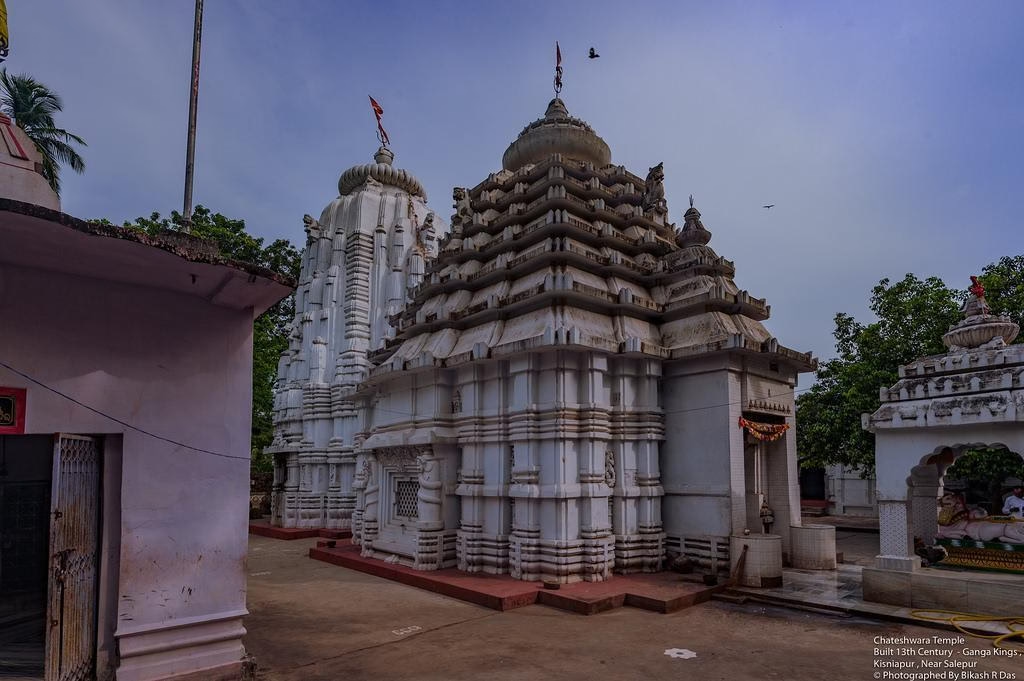
Based on the architectural style and recovered sculptures, historians date the temple to the 12th Century AD. This era coincides with the reign of the Eastern Ganga Dynasty, a golden age for Odishan art and culture. The Gangas were prolific builders, responsible for the iconic Jagannath Temple in Puri and the Sun Temple at Konark. The craftsmanship at Chateshwar—specifically the multi-segmented horizontal mouldings on the Bada (vertical wall)—bears the distinct signature of this period.
Scriptural & Oral Traditions
According to local oral legends (Sthala Purana), the site was originally a dense forest where sages performed intense austerities to please Lord Shiva. It is said that the Patalaphuta Shivalinga emerged naturally from the earth (a Swayambhu manifestation) at the spot where the sages’ penance reached its apex. While specific Vedic verses are not exclusively written for this temple, the rituals performed here strictly adhere to the Shiva Purana.
Architectural Marvels
The Chateshwar Temple is a masterpiece of Kalinga Architecture, a distinct sub-style within the Nagara order. The structure is defined by its vertical emphasis and intricate stonework.
Pancharatha Design
The temple follows a Pancharatha plan, meaning the sanctum is flanked by five distinct projections on each side. This creates a rhythmic play of light and shadow on the external walls. The Bada (superstructure) is adorned with multi-segmented horizontal mouldings, a characteristic feature that adds a sense of stability and grandeur.
The Ruined Sculptures & Preserved Sanctum
Walking through the temple complex, one encounters a fascinating collection of detached sculptures. Although many statues—including deities like Chamunda, Surya (Sun God), and Buddha—lie in a ruined state, they offer a glimpse into the temple’s syncretic past where various faiths coexisted. Notable installations include:
- Four-Armed Vishnu: A miniature yet detailed image.
- Nandi: The loyal vahana (vehicle) of Lord Shiva, facing the sanctum.
- Udyotasimha: A mythical lion-like figure often associated with protective energy.
Despite the weathering of exterior elements, the inner sanctum remains a protected spiritual space, housing the enshrining deity in its pristine form.
Darshan & Ritual Logistics
To facilitate a smooth pilgrimage experience, the temple management has established clear timings and ritual schedules. As of 2026, these protocols are strictly followed to ensure the sanctity of the space.
Daily Temple Timings
The following table outlines the daily opening and closing hours for the Chateshwar Temple. Note: Timings may vary slightly on major festival days.
| Session | Timings | Activity |
|---|---|---|
| Morning Darshan | 06:00 AM – 12:00 PM | Mangala Alati, Abhishekam |
| Afternoon Break | 12:00 PM – 03:00 PM | Temple Closed |
| Evening Darshan | 03:00 PM – 08:00 PM | Sandhya Alati, Bada Dhupa |
Key Sevas & Online Booking
Devotees can participate in various Sevas (offerings) to the deity. While the temple follows traditional methods, online booking systems are increasingly utilized for special festivals.
- Abhishekam: Ritual bathing of the Shivalinga with milk, honey, and water. Timing: 7:00 AM daily.
- Archana: Personalized chanting of Shiva mantras. Timing: Throughout darshan hours.
- Maha Deepa: Offering of ghee lamps, especially potent during Pradosh.
Booking Info: For major festivals, visit the official Odisha Temple Administration portal or the local temple office in Cuttack to book Seva slots in advance.
2026 Festival Calendar
The temple celebrates major Hindu festivals with grandeur. If you are planning a visit in 2026, mark these dates:
- Maha Shivaratri: February 26, 2026. (The most significant night at Chateshwar)
- Phala Amavasya: January 29, 2026. (A major day for ancestral rites)
- Kartik Purnima: November 15, 2026. (Celebrated with lamps and holy bathing)
- Sankranti: January 14, 2026. (Harvest festival offerings)
Practical Visitor Guidance
Visiting a heritage site requires respect for both the culture and the structure. Here are the essential guidelines for your visit to Chateshwar Temple.
Code of Conduct & Dress Code
- Attire: Traditional Indian clothing (dhoti/saree) is preferred. Modest, clean attire is mandatory. Avoid shorts and sleeveless tops.
- Photography: Photography is generally permitted in the outer complex. However, strictly prohibited inside the sanctum (Garbhagriha).
- Mobile Phones: Silence is required. Use lockers (if available) or keep phones on silent mode before entering the main shrine.
Crowd Management & Seasonal Advice
- Best Hours: Visit between 6:00 AM and 8:00 AM for a peaceful darshan, or after 5:00 PM.
- Summer (March – June): Cuttack can be humid. Carry a water bottle and a head cover. Light cotton clothes are recommended.
- Monsoon (July – September): The region receives heavy rainfall. Carry an umbrella and wear waterproof footwear.
Pilgrimage Connectivity
Chateshwar Temple is easily accessible from the heart of Cuttack and neighboring cities.
How to Reach
- By Air: The nearest airport is Biju Patnaik International Airport (BBI) in Bhubaneswar, approximately 45 km away. A taxi or Uber takes about 1 hour 15 minutes.
- By Rail: The closest major railway junction is Cuttack Railway Station (approx. 15 km). Local auto-rickshaws are readily available to Bahugram.
- By Road: The temple is located near Bahugram. It is accessible via the Cuttack–Jagatpur Road. Private vehicles can park near the complex entrance.
Nearby Sacred Sites
Extend your pilgrimage with these nearby spiritual destinations:
- Gada Chandi Temple: Located within the Cuttack city area, this temple is revered by locals and is situated near the iconic Dhabaleswar Bridge.
- Dhabaleswar Temple: Located on an island in the Mahanadi River (approx. 30 km), accessible by boat. Famous for its suspension bridge and ancient rock-cut carvings.
- Katasraj Temple: A complex of seven temples (Chhatar Jhadi) located on the outskirts of Cuttack, showcasing Kalinga architecture.
Frequently Asked Questions (FAQ)
1. What is the historical significance of the Chateshwar Temple?
The Chateshwar Temple is historically significant because it dates back to the 12th Century AD, built during the Eastern Ganga Dynasty. It is one of the few temples in Cuttack that houses a unique Patalaphuta Shivalinga, representing ancient Shaivite worship traditions.
2. Is there a VIP darshan entry available?
Currently, the Chateshwar Temple does not have a formal VIP darshan queue like large state-run temples. Darshan is egalitarian. However, booking an Abhishekam Seva allows for closer access to the deity during the ritual time.
3. What are the exact contact details for the temple?
As the temple is managed by local trustees and the district administration, the primary contact is usually via the District Magistrate’s office in Cuttack or the local shrine priest. For specific inquiries, visitors can refer to the Address: Krushnapur Village, Near Bahugram, Cuttack, Odisha.
4. Are there accommodation facilities nearby?
There are no guest houses directly at the temple site. It is recommended to stay in Cuttack city (approx. 15 km), where numerous hotels and lodges range from budget to 4-star categories.
5. Can non-Hindus visit the temple?
While the temple is a place of historical and architectural interest, the sanctum sanctorum is strictly reserved for Hindu devotees for worship. Non-Hindus are generally allowed in the outer courtyard but should respect local sentiments and religious protocols.
Recent Posts

Shri Kaamkoteeshwar Mandir, Varanasi – History & Significance
In the heart of Kashi, the eternal city of Lord Shiva, where the Ganges flows with celestial grace, stands the Shri Kaamkoteeshwar Mandir. This sacred Sannidhi is not merely a temple but a profound spiritual bridge between the Northern…

ओ सांवरे तूने ही मुझको संभाला – Lyrics & Meaning
ओ सांवरे तूने ही मुझको संभाला – A Prayer to Shyam Origin & Spiritual Essence Why This Bhajan Resonates Devotees chant this when overwhelmed by life’s storms—the refrain ‘तूने ही मुझको संभाला’ is the soul’s sigh of relief: “You…

कथा ये है महाराज मेरे की – Lyrics & Meaning
कथा ये है महाराज मेरे की छत्रपति संभाजी महाराज – A Prayer to Chhatrapati Sambhaji Maharaj Origin & Spiritual Essence Why This Bhajan Resonates Devotees chant this when their spirit feels tested—its powerful refrain “महाराज मेरे” is a soul’s…

Rigveda Samhita Yathartha Anuvada (ऋग्वेद संहिता यथार्थ अनुवाद) – Complete Set with Anvayartha & Hindi/English Translation
The Rigveda is the oldest surviving scripture of humanity and the foundational text of Sanātana Dharma. For serious students, scholars, UPSC aspirants studying ancient Indian history, Sanskrit learners, and spiritual seekers, a precise and grammatically structured translation is indispensable.…

आना भी अकेला है जाना भी अकेला है – Lyrics & Meaning | BharatTemples
आना भी अकेला है जाना भी अकेला है – A Prayer to the Divine Witness Origin & Spiritual Essence Why This Bhajan Resonates Devotees turn to this bhajan in moments of deep reflection—when life’s attachments begin to ache. The…

माता शेरावाली के द्वार जो भी जाता है – Lyrics & Meaning
माता शेरावाली के द्वार जो भी जाता है – A Prayer to Maa Sherawali Origin & Spiritual Essence Why This Bhajan Resonates Devotees turn to this bhajan in times of fear or uncertainty—its promise that no one leaves Maa’s…

मार लेना सपणी उबार लेणा भवरा – Lyrics & Meaning
मार लेना सपणी उबार लेणा भवरा – A Prayer to the Divine Beloved Origin & Spiritual Essence Why This Bhajan Resonates Devotees chant this in moments of deep vulnerability—its cry of “मार लेना सपणी, उबार लेणा भवरा” is the…

हमें श्याम सुंदर भरोसा तुम्हारा – Lyrics & Meaning
हमें श्याम सुंदर भरोसा तुम्हारा – A Prayer to Shyam Sundar Origin & Spiritual Essence Why This Bhajan Resonates Devotees chant this when feeling alone—its refrain ‘de do sahara’ is the soul’s cry for divine support. Lyrics in Hindi…

Mere Satguru Ne Di Thi Davai Lyrics in Hindi & Meaning
Mere Satguru Ne Di Thi Davai: Invoking the Guru’s Liberating Wisdom This soul-stirring bhajan venerates the Satguru (True Spiritual Master) as the divine physician who dispenses the only remedy for life’s deepest sufferings. Composed by Sant Karmaveer Tufani, it…

Janm Diyo Thari Maa Dukh Dekhiyo Lyrics in Hindi & Meaning
जन्म दियो थारी माँ दुख देखियो (Maa’s Grief Upon Birthing You) This soul-stirring Chetavani Bhajan (admonitory hymn) is addressed to the Divine Mother (Maa) – a call for repentance when children forget their filial duties in the dark age…