Durmukh Vinayak Temple, Varanasi: History, Darshan Timings & Guide
Receive daily temple updates, divine darshan, and morning bhajans directly on WhatsApp.
Contents
- 1 Introduction & Spiritual Essence
- 2 Historical Origins & Scriptural Legend
- 3 Architectural Marvels
- 4 Darshan & Ritual Logistics
- 5 Practical Visitor Guidance
- 6 Pilgrimage Connectivity
Introduction & Spiritual Essence
Varanasi (Kashi) is often described as the city of Lord Shiva, but it is equally the realm of Lord Ganesha. According to traditional scriptures, there are 56 forms of Ganesha (Ekavimshati Ganapati) scattered throughout the holy city, each known to remove specific obstacles for devotees. Among these, the Durmukh Vinayak holds a unique place of reverence.
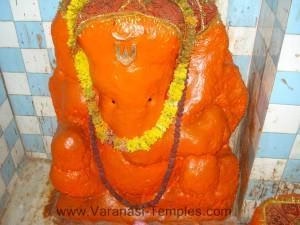
Deity & Form: The presiding deity here is Lord Ganesha, worshipped specifically as Durmukh Vinayak. The name “Durmukh” combines two Sanskrit words: Dur (difficult/hard) and Mukh (face), or sometimes interpreted as “One with a fierce face.” The phalashruti (promise of benefits) associated with visiting this temple is profound: it is believed to help devotees overcome difficult facial expressions or hardships in life, ensuring a happy countenance and removing the “fierce” aspects of karma.
Phalaśruti (Spiritual Benefit): Legend holds that offering prayers here cleanses ancestral karma and resolves unresolved legal or verbal disputes. It is particularly potent for students seeking knowledge and travelers wishing for a safe journey.
Historical Origins & Scriptural Legend
While the exact date of construction is not explicitly recorded in official archives, the temple belongs to the medieval period of Varanasi’s history, likely constructed during the Bhonsle or Maratha era (17th–18th century) when many of Kashi’s Ganesh temples were renovated or established in stone.
The Sthala Purana (Local Legend):
Tradition holds that this temple derives its name from the complexion of the deity (historically painted with symbolic ferocity) or through an oral legend involving a demon vanquished by Lord Ganesha in Kashi. In Kashi, every Ganesha is considered the “Vighnaharta” (Remover of Obstacles). The Durmukh form is specifically invoked to turn sorrow into joy—transforming the “Durmukh” (hard face) of a devotee’s life into a “Sunder Mukh” (beautiful face).
📖 Related: Varuneshwar Temple, Varanasi: History, Darshan Timings & Complete Guide
Architectural Marvels
The Durmukh Vinayak Temple features the classic Nagara and Bhakti-era architectural styles predominant in the North Indian region. While not a massive structural complex, it embodies the intimate scale of traditional Varanasi shrines.
- Sanctum Sanctorum (Garbhagriha): The inner chamber houses the idol of Durmukh Vinayak, typically carved in black stone, symbolizing the infinite void from which creation emerges.
- Mandapa: A modest pillared hall allows devotees to sit and chant mantras, though the sanctity of the space is preserved for small gatherings.
- Location Specifics: Situated in the narrow, winding Galis of Chowk, the architecture is designed to protect the deity from the harsh elements while creating a serene acoustic environment for chanting.
| Date built: | – |
|---|---|
| Deity: | Durmukh Vinayak |
| Architectural style: | Hindu Temple architecture |
| Major festivals | – |
| Locale: | Varanasi |
| District:: | Varanasi |
| Address: | – |
| Phone | – |
Darshan & Ritual Logistics
The temple maintains a schedule aligned with the natural rhythms of Varanasi—awakening early and resting late. While the inner sanctum is small, the energy is potent.
Daily Timings (2026)
| Session | Timing | Notes |
|---|---|---|
| Morning Darshan | 06:00 AM – 11:00 AM | Best time for a peaceful Darshan. |
| Afternoon Closure | 11:00 AM – 04:30 PM | The temple remains closed for deity care. |
| Evening Darshan | 04:30 PM – 09:00 PM | Includes Aarti and evening rituals. |
| Aarti Times | 07:00 AM & 07:30 PM | Subject to local seasonal adjustments. |
Key Sevas & Online Booking
Unlike larger temples, Durmukh Vinayak traditionally allows devotees to perform basic Abhishekam (ritual bathing) and Archana (recitation of names) by themselves, as per the original content.
- Self-Perform Puja: Devotees are encouraged to bring flowers and offer them directly. (Approx. Cost: Free or nominal offering).
- Special Abhishekam: For specific dates (Wednesdays, the weekly Ganesha day), arrangements can be made with the temple priest.
📖 Related: Shri Atmavireshwar Mahadev Temple History & Darshan Timings Guide
Note: As of 2026, specific online booking portals for this minor shrine may not be available via the Kashi Vishwanath Digital Board. It is recommended to contact the local priest association or visit directly.
2026 Key Festival Dates
- Sankashti Chaturthi: The most auspicious day for Ganesha. Dates vary by lunar calendar (e.g., Feb 2, June 28, Dec 22).
- Ganesh Chaturthi: September 7, 2026 (A grand celebration with special decorations).
- Magh Shukla Chaturthi: A regional festival celebrated with special Modak offerings.
Practical Visitor Guidance
Visiting Varanasi temples requires preparation due to the dense urban fabric of the Old City.
Etiquette & Rules
- Dress Code: Modest attire is mandatory. Men should remove footwear and often shirts (carrying a separate cloth is advised). Women should wear sarees or modest dresses covering shoulders and knees.
- Photography: Strictly prohibited inside the inner sanctum. It is best to ask permission before photographing the exterior architecture or priest activities.
- Mobiles: Silence phones. There are no dedicated locker systems at this specific minor shrine; carry only essentials.
Crowd Management & Seasonality
Best Time to Visit: The most pleasant months are November to February. Summers (April–June) in Varanasi are extremely hot; carry water and visit during the early morning window (6 AM).
Avoid: Sundays and public holidays during the wedding season (December–January) as Chowk becomes extremely congested.
Pilgrimage Connectivity
Reaching Durmukh Vinayak requires navigating the narrow lanes of the Old City.
How to Reach
- By Air: Lal Bahadur Shastri International Airport (LBS) is approx. 25 km away. Taxis and the Metro (up to Cantt station) are available.
- By Rail: Varanasi Junction (BSB) is the nearest major railway station (approx. 5 km from Chowk).
- By Road: Auto-rickshaws can take you to Chowk Gate (near Shri Kashi Vishwanath Temple). From there, it is a 10-minute walk through pedestrian lanes. No vehicles are allowed inside.
How to Reach
Durmukh Vinayak is located at Ck.34/60, near Kashi Karvat Temple. If a devotee proceeds from Kashi Karvat temple towards Saraswati Phatak, there is a shop on the left side called Maa Rama Silk Factory. Adjacent to this shop is a house where Durmukh Vinayak is located. Devotees can travel up to Chowk by rickshaw and walk on foot to this place.
📖 Related: Vriddh Aditya Temple Varanasi: History, Darshan Timings & Complete Guide
Nearby Sacred Sites
Build a pilgrimage circuit by visiting these nearby locations within Chowk:
- Kashi Karvat Temple (0.1 km): Famous for the deity Brahma (the only one in Varanasi) and the ritual of breaking coconuts.
- Shri Kashi Vishwanath Jyotirlinga (0.5 km): The center of the spiritual universe. Use the extended morning hours for shorter queues.
- Sankat Mochan Hanuman Temple (2 km): Accessible via a cycle rickshaw. Famous for the Tulsidas library and Hanuman ji’s idol.
Frequently Asked Questions (FAQ)
1. Is there a VIP Darshan entry at Durmukh Vinayak?
Given the intimate size of the shrine, there is no formal VIP entry system. However, visiting before 7:00 AM or after 8:00 PM ensures a private audience with the deity.
2. Can we perform Puja without a priest?
Yes, unlike many major temples, Durmukh Vinayak allows devotees to perform self-puja. You may offer flowers, durva grass, and sweets (Modak) directly to the deity.
3. What is the significance of “Durmukh”?
In this context, it relates to overcoming hardships and transforming suffering. It is often associated with relieving the devotee from the burden of past sins (Karmic baggage).
4. Is photography allowed?
Photography of the inner deity is strictly forbidden. Photography of the exterior architecture may be permitted, but it is respectful to ask the priest.
5. Is the temple wheelchair accessible?
No. Due to the historic layout of Varanasi’s old streets (Chowk), the lanes are narrow and uneven. Wheelchairs cannot navigate the interior lanes leading to the temple.
Photo Gallery
Contact Details
Official Address: Durmukh Vinayak Temple, Ck.34/60, Chowk, Varanasi, Uttar Pradesh 221001