

Contents
- 1 Dwarkadhish Temple (Jagat Mandir): The Definitive 2026 Pilgrimage Guide
- 1.1 Introduction & Spiritual Essence
- 1.2 Historical Origins & Scriptural Legend
- 1.3 Architectural Marvels
- 1.4 Darshan & Ritual Logistics
- 1.5 Practical Visitor Guidance
- 1.6 Pilgrimage Connectivity
Dwarkadhish Temple (Jagat Mandir): The Definitive 2026 Pilgrimage Guide
Introduction & Spiritual Essence
The Dwarkadhish Temple, also revered as the Jagat Mandir (Universal Temple), stands as the spiritual beacon of Dwarka, Gujarat. Dedicated to Lord Krishna, who is worshipped here in his majestic form as the “King of Dwarka” (Dwarkadhish), this temple is one of the holiest sites in Hinduism. Unlike the childhood deity of Krishna, this form represents the royal, ruling King of Dwarka, eternally ruling from his celestial capital on the shores of the Arabian Sea.
Phalaśruti: The Spiritual Benefits
Devotees flock to this ancient shrine seeking liberation from the cycle of rebirth. The Sthala Purana (local legend) suggests that a mere glimpse of the deity here washes away the sins of past lives. Specifically, devotees visit to:
- Cleanse Ancestral Karma: Performing Shraddha and Tarpan rituals here is considered highly potent for pacifying ancestors.
- Attain Mental Peace: The proximity to the ancient energy of Lord Krishna’s own city offers profound tranquility.
- Material and Spiritual Success: As the lord of the Char Dham, blessings here are believed to balance worldly success with spiritual progress.
Historical Origins & Scriptural Legend
The Vajranabh Connection
According to temple records and oral traditions, the original structure was constructed by King Vajranabha, the great-grandson of Lord Krishna, over the Lord’s residential palace (Hari-griha). While archaeological findings suggest the current foundations are 2,000–2,200 years old, the temple complex visible today has been significantly renovated and enlarged.
Scriptural & Regional Significance
The temple’s sanctity is rooted in the Divya Prabandha, where it is glorified as the 98th Divya Desam of Lord Vishnu. It is an integral part of the Char Dham pilgrimage, a circuit established by the 8th-century philosopher Adi Shankaracharya. A memorial inside the temple complex marks his historic visit. Unlike many other temples, Dwarkadhish follows the Pushtimarg tradition, established by Vallabhacharya and Vitheleshnath, emphasizing the soulful service of Lord Krishna.
Renovation Phases
While the spiritual lineage is ancient, the architectural history reveals a timeline of resilience. The temple structure was expanded significantly during the 15th and 16th centuries under the patronage of the Chaulukya dynasty, preserving the sanctity of the site against the backdrop of coastal erosion and historical upheavals.
Architectural Marvels
The town of Dwarka, situated on the banks of the Gomti River, is described in the Mahabharata as the legendary capital of Lord Krishna. The temple architecture is a testament to this grandeur.
Style & Dimensions
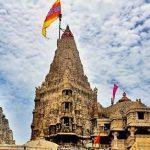
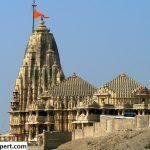
The temple is constructed in the classic Chaulukya style of temple architecture, characterized by intricate stone carvings and tiered structures. The main shrine rises to a height of 51.8 meters. It features a 5-storied structure supported by 72 massive pillars—a defining feature of the Jagat Mandir.
Notable Features
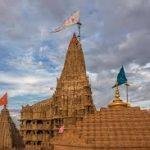
- The Shikhara (Spire): The towering spire dominates the skyline of Dwarka. It is adorned with colorful flags that are changed five times a day, symbolizing the ongoing service of the deity.
- The Mandapas: The sanctum is preceded by pillared halls featuring distinct architectural elements.
- Sculptures: The exterior walls display carvings from Hindu mythology, though the exterior is surprisingly austere, designed to withstand the saline coastal winds. The intricacy lies within the inner sanctum.
- Underwater Mystery: Coastal erosion studies and anchors found on-site suggest that the harbor dates to historical times, with parts of the ancient structure now submerged in the Arabian Sea.
Darshan & Ritual Logistics
The Pushtimarg rituals dictate the daily rhythm of the temple. The idol of Dwarkadhish is dressed in royal attire, and the atmosphere is one of joyful devotion.
Daily Darshan Timings
Timings are subject to change based on seasonal adjustments and special events. Devotees are advised to verify updates locally.
| Session | Timing |
|---|---|
| Morning Darshan | 06:00 AM – 12:30 PM |
| Evening Darshan | 05:00 PM – 09:30 PM |
| Aarti Timings | Morning (0:00 AM) & Evening (Varies) |
Key Sevas & Online Booking
To facilitate the growing influx of pilgrims, the temple trust has digitized many offerings.
- Abhishekam: Ritual bathing of the deity with milk, honey, and water. Best performed during the Brahma Muhurta.
- Archana: Chanting the Lord’s names in specific vernaculars (Hindi/Gujarati/Sanskrit).
- Online Booking: Devotees can book Sevas via the official Shree Dwarkadhish Temple Trust website or trusted third-party portals like BharatTemples.com. Look for the “Online Darshan” or “Seva” tab.
2026 Festival Dates & Timings
Visiting during festivals offers a divine experience but requires patience due to crowds. Special timings are announced 15 days prior to the event.
- Janmashtami: 14th – 15th August 2026 (The primary festival of Dwarka). The temple remains open 24 hours on the main day.
- Naraka Chaturdashi: 18th October 2026
- Holi: 14th March 2026 (Celebrated with Tulsi leaves).
- Vaishnav Akshaya Tritiya: 30th April 2026
Practical Visitor Guidance
Code of Conduct & Dress Code
As a place of high reverence, decorum is strictly maintained.
- Dress Code: Traditional attire is mandatory. Men should wear Dhoti/Kurta or formal shirts and trousers (no shorts). Women must wear Saree, Salwar Kameez, or full-length skirts. Avoid tight-fitting western wear.
- Photography: Strictly prohibited inside the inner sanctum (Grahbagh). Photography is allowed in the courtyard areas, but flashes must be turned off.
- Electronic Items: Mobile phones, cameras, and bags must be deposited at the free lockers provided at the entrance gate. We recommend carrying minimal cash only.
- Accessibility: The temple has ramps for wheelchair access, but the inner sanctum involves steps. Elders can request assistance from temple volunteers.
Crowd Management Strategy
- Best Time to Visit: Weekdays (Tuesday–Thursday) are generally less crowded than weekends. Early mornings (6:00 AM) offer the most peaceful Darshan.
- Seasonal Advice:
- May–June: Extremely hot and humid. Carry water bottles (available at multiple kiosks) and wear breathable cotton.
- July–September: Monsoon. The Gomti river swells; the area near the temple can get slippery.
Pilgrimage Connectivity
How to Reach Dwarka
Dwarka is well-connected by road, rail, and air.
- By Air: The nearest airport is Porbandar Airport (PBD), located approximately 105 km away. Alternatively, Rajkot International Airport (RAJ) is about 240 km away.
- By Rail: Dwarka Railway Station (DWK) is on the Okha-Porbandar broad-gauge line. It is roughly 2 km from the temple. Direct trains are available from major hubs like Ahmedabad and Rajkot.
- By Road: Dwarka is connected via the NH-51. Regular GSRTC buses ply from Ahmedabad (approx. 12-14 hours) and Rajkot (approx. 6-7 hours).
Appendix: Photo Gallery
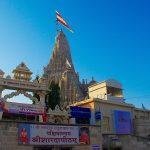
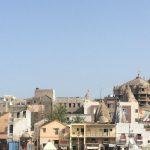
Visualizing the divine architecture aids in spiritual preparation. Explore the grandeur of Jagat Mandir through these curated captures.

Nearby Sacred Sites (The Pilgrimage Circuit)
While in Dwarka, the pilgrimage extends beyond the main temple walls. The area is a spiritual cluster:
- Bet Dwarka (Oka Mandir): Located on an island 30 km offshore, accessible by ferry. This is believed to be the actual residential site of Krishna. The temple here is attributed to Samba, son of Krishna.
- Rukmini Devi Temple: Situated 2 km north of the main temple. Legend says this is where Rukmini (Krishna’s chief queen) was cursed by Sage Durvasa, resulting in the river Ganga emerging from the spot.
- Nageshwar Jyotirlinga: One of the 12 sacred Jyotirlingas of Lord Shiva, located 12 km from Dwarka on the route to Gomti Ghat.
Frequently Asked Questions (FAQ)
1. Is there a VIP Darshan entry available?
Yes, the temple trust offers special darshan tickets (usually ₹100–₹200) for those who wish to bypass the general queue during peak hours. These can be purchased at the administrative counter near the entrance.
2. Can non-Hindus enter the Dwarkadhish Temple?
No. Like many ancient Hindu shrines, entry is restricted to those who practice the Hindu faith (Sanatana Dharma). Non-Hindu visitors can view the exterior architecture and enjoy the ambiance of the courtyard.
3. What is the difference between Dwarkadhish and Jagat Mandir?
They refer to the same structure. “Dwarkadhish” is the deity (the King of Dwarka), while “Jagat Mandir” is the name of the temple complex itself (meaning “World Temple”).
4. Are there hotels near the temple?
Yes, Dwarka has ample accommodation ranging from budget dharamshalas (GMDC Guest House) to luxury hotels like the Fortune Hotel and the Dwarka Residency. The area around Gomti Ghat is highly recommended for proximity to the temple.
5. What is the contact number for the temple trust?
For official inquiries and clarifications regarding rituals, you can contact the Temple Trust office at +91-2892-234080.
Address: Dwarka, Gujarat 361335, India.
Contact Details
Shree Dwarkadhish Temple TrustDwarka, Gujarat – 361335
Phone: 02892 234 080
Recent Posts

Shri Kaamkoteeshwar Mandir, Varanasi – History & Significance
In the heart of Kashi, the eternal city of Lord Shiva, where the Ganges flows with celestial grace, stands the Shri Kaamkoteeshwar Mandir. This sacred Sannidhi is not merely a temple but a profound spiritual bridge between the Northern…

ओ सांवरे तूने ही मुझको संभाला – Lyrics & Meaning
ओ सांवरे तूने ही मुझको संभाला – A Prayer to Shyam Origin & Spiritual Essence Why This Bhajan Resonates Devotees chant this when overwhelmed by life’s storms—the refrain ‘तूने ही मुझको संभाला’ is the soul’s sigh of relief: “You…

कथा ये है महाराज मेरे की – Lyrics & Meaning
कथा ये है महाराज मेरे की छत्रपति संभाजी महाराज – A Prayer to Chhatrapati Sambhaji Maharaj Origin & Spiritual Essence Why This Bhajan Resonates Devotees chant this when their spirit feels tested—its powerful refrain “महाराज मेरे” is a soul’s…

Rigveda Samhita Yathartha Anuvada (ऋग्वेद संहिता यथार्थ अनुवाद) – Complete Set with Anvayartha & Hindi/English Translation
The Rigveda is the oldest surviving scripture of humanity and the foundational text of Sanātana Dharma. For serious students, scholars, UPSC aspirants studying ancient Indian history, Sanskrit learners, and spiritual seekers, a precise and grammatically structured translation is indispensable.…

आना भी अकेला है जाना भी अकेला है – Lyrics & Meaning | BharatTemples
आना भी अकेला है जाना भी अकेला है – A Prayer to the Divine Witness Origin & Spiritual Essence Why This Bhajan Resonates Devotees turn to this bhajan in moments of deep reflection—when life’s attachments begin to ache. The…

माता शेरावाली के द्वार जो भी जाता है – Lyrics & Meaning
माता शेरावाली के द्वार जो भी जाता है – A Prayer to Maa Sherawali Origin & Spiritual Essence Why This Bhajan Resonates Devotees turn to this bhajan in times of fear or uncertainty—its promise that no one leaves Maa’s…

मार लेना सपणी उबार लेणा भवरा – Lyrics & Meaning
मार लेना सपणी उबार लेणा भवरा – A Prayer to the Divine Beloved Origin & Spiritual Essence Why This Bhajan Resonates Devotees chant this in moments of deep vulnerability—its cry of “मार लेना सपणी, उबार लेणा भवरा” is the…

हमें श्याम सुंदर भरोसा तुम्हारा – Lyrics & Meaning
हमें श्याम सुंदर भरोसा तुम्हारा – A Prayer to Shyam Sundar Origin & Spiritual Essence Why This Bhajan Resonates Devotees chant this when feeling alone—its refrain ‘de do sahara’ is the soul’s cry for divine support. Lyrics in Hindi…

Mere Satguru Ne Di Thi Davai Lyrics in Hindi & Meaning
Mere Satguru Ne Di Thi Davai: Invoking the Guru’s Liberating Wisdom This soul-stirring bhajan venerates the Satguru (True Spiritual Master) as the divine physician who dispenses the only remedy for life’s deepest sufferings. Composed by Sant Karmaveer Tufani, it…

Janm Diyo Thari Maa Dukh Dekhiyo Lyrics in Hindi & Meaning
जन्म दियो थारी माँ दुख देखियो (Maa’s Grief Upon Birthing You) This soul-stirring Chetavani Bhajan (admonitory hymn) is addressed to the Divine Mother (Maa) – a call for repentance when children forget their filial duties in the dark age…