Kodi Maram Temple Palani: History, Darshan Timings & Guide

Receive daily temple updates, divine darshan, and morning bhajans directly on WhatsApp.
Contents
- 1 Introduction & Spiritual Essence: The Kodimaram and the Lord
- 2 Historical Origins & Scriptural Legend
- 3 Architectural Marvels
- 4 Darshan & Ritual Logistics (2026 Guide)
- 5 Practical Visitor Guidance
- 6 Pilgrimage Connectivity
- 7 Frequently Asked Questions (FAQs)
- 8 Photo Gallery
- 9 Contact Details
Introduction & Spiritual Essence: The Kodimaram and the Lord
The Kodi Maram Temple Palani, formally revered as the Arulmigu Dhandayuthapani Swamy Temple, stands as one of the six sacred abodes (Arupadaiveedu) of Lord Murugan. While often recognized by the towering Kodimaram (Flagstaff) that graces its entrance, the temple signifies a profound spiritual transition. Located at the foothills of Palani Malai, this temple is the primary gateway for pilgrims before ascending to the main shrine atop the hill.
According to Agama Shastra, the kodimaram represents the jeevadhara or the life-sustaining pillar of the temple body, mirroring the human spine that supports consciousness. Devotees visit this site to seek the blessings of Dhandayuthapani (the one who holds the Dandam or staff), the ascetic form of Lord Murugan, who renounced his jewels to become a sanyasi.
Phalaśruti: The Benefits of Visiting
- Removal of Obstacles: The Dandam symbolizes authority and the power to cut through ignorance; devotees believe that sincere darshan here removes life’s hurdles.
- Wisdom and Focus: As a Guru (teacher) figure, Lord Dhandayuthapani grants mental clarity and academic success.
- Cleansing Ancestral Karma: Performing rituals here, especially during Pradosham, is believed to cleanse ancestral lineage issues and liberate souls from Punar Janma (cycle of rebirth).
📖 Related: Srivilliputhur Andal Temple History, Darshan Timings & Complete Guide (2026)
Historical Origins & Scriptural Legend
The Legend of Palani
Tradition holds that the Palani Murugan idol was created by the sage Agastya. The Sthala Purana narrates that once, Lord Murugan consumed the fruit of wisdom (Jnana Palam) given by his father, Lord Shiva, after Narada Muni’s test. When he could not split the fruit into two, he moved to Palani to meditate and attain cosmic wisdom. This Dhandayuthapani form represents his phase of seeking knowledge through Tapas (penance).
Historical Timeline and Renovations
The temple complex reflects centuries of devotion and patronage.
- The First Citadel: According to temple records, the original temple atop Palani Hill was constructed by the Chera Dynasty over 2,000 years ago.
- Samaya Samvardhani Order: The Nayakar Kings (successors to the Vijayanagara Empire) were instrumental in the 16th century, establishing the current administrative structure known as the Palani Panchamirtham and the Podi Dharanai.
Architectural Marvels
Dravidian Architecture & The Human Form
The temple is a masterpiece of Dravidian Architecture. It is designed to embody the human body, where the Garbhagriham (Sanctum Santorum) represents the head, and the Vimana above signifies the nose tip. The Kodimaram located in front of the Sanctum represents the Jeevadhara (neck/vertebra).
As described in the provided Agama texts:
“Just as our gross body has five sections – head, neck, chest, legs and feet – a Temple also has five corresponding sections. The Ardhamandap in front of the Sanctum represents the neck, while the Maha Mandapam represents the chest. The prakaras surround the Sanctum like our five senses.”
The temple complex at the foothills features a majestic Goopuram (gateway tower) that serves as the “feet” of the deity, guiding pilgrims into the sacred space.
Darshan & Ritual Logistics (2026 Guide)
Daily Darshan Timings
The Kodi Maram Temple at the foothills manages the influx of pilgrims with strict timings. These timings align with the daily Nadai (procession) of the Lord.
📖 Related: Dharanishwarar Temple, Thamaraipakkam: History, Darshan Timings & Guide
| Session | Timing | Status |
|---|---|---|
| Morning Darshan | 06:00 AM – 12:00 PM | Open |
| Afternoon Break | 12:00 PM – 04:00 PM | Closed |
| Evening Darshan | 04:00 PM – 08:00 PM | Open |
Key Sevas & Online Booking
To streamline the experience, the temple administration allows digital registration for Sevas. You can book Abhishekam (sacred bathing) and Archana (recitation of names) via the official temple portal.
- Morning Abhishekam: 06:30 AM
- Midday Archana: 11:00 AM
- Evening Deeparadhana: 06:30 PM
2026 Festival Calendar (Major Dates)
- Thaipusam: January 13, 2026 (Moonrise: 7:30 PM) – Celebrating the day Murugan received the Vel from Parvati.
- Panguni Uthiram: April 12, 2026 – The celestial wedding of Lord Murugan and Devasena.
- Kanda Shashti: November 7 – 13, 2026 – The most important festival marking the victory over Surapadman.
Practical Visitor Guidance
Code of Conduct & Dress Code
As this is a major Panchagiri Peetham, modesty is paramount.
- Attire: Men must remove shirts and wear Veshti (dhoti) or trousers. Women should wear sarees, half-sarees, or churidars.
- Electronics: Mobile phones and cameras are strictly prohibited in the inner sanctum. Use the free cloakroom facilities provided near the Palani Bus Stand or at the foothills entrance.
- Accessibility: Ramps are available for wheelchair access at the Maha Mandapam, though the Kodimaram area has stone flooring.
Crowd Management Strategy
- Best Time to Visit: Weekdays between 07:00 AM and 09:00 AM offer the shortest queues.
- Seasonal Advice: During the summer months (April-May), Palani experiences temperatures above 35°C. It is advised to carry water and consume the temple-provided Panchamirtham regularly.
Pilgrimage Connectivity
How to Reach Kodi Maram Temple
By Air: The nearest airport is Coimbatore International Airport (approx. 100 km). Major airlines like Indigo, Air India, and SpiceJet operate regular flights from Ahmedabad, Bangalore, Chennai, Hyderabad, and New Delhi.
By Train: Palani Railway Station connects directly to Chennai Central (Chennai – Palani Express) and Madurai. There are also lines extending to Pollachi and Tiruchendur.
By Bus: The Tamil Nadu State Transport Corporation (TNSTC) and private operators run frequent buses from Coimbatore, Madurai, Trichy, and Tuticorin to the Palani Old Bus Stand, located just 200 meters from the Kodimaram entrance.
📖 Related: Apparswami Temple, Mylapore: History, Darshan Timings & Guide
Nearby Sacred Sites (Circuit)
Palani is part of the Murugan circuit. After visiting the Kodi Maram Temple, consider:
- Palani Hilltop Temple: Accessible via the Winch (cable car) or footpath (6km trek).
- Kurinji Andavar Temple: Located 3km from Palani, known for the Kurinji flowers that bloom once every 12 years.
- Natham Mandapam: A sacred site along the varaha river where sage Agastya performed penance.
Frequently Asked Questions (FAQs)
1. Is there a VIP Darshan entry available?
Yes, the temple offers a Special Darshan ticket (approx. Rs. 100 per person) which allows devotees to bypass the general queue. This can be purchased at the counter or booked online. A donation of Rs. 25,000 to the temple funds allows for a Uparosa Kumara (Executive) Darshan for up to 10 people.
2. Can I enter with leather items?
Leather items (belts, wallets, shoes) are strictly prohibited inside the Sanctum Sanctorum and the Mandapas. However, they are permitted in the outer corridors (Prakaras) and shops.
3. Is the queue for climbing the hill the same as for the Kodi Maram Temple?
No. The Kodi Maram Temple (Dhandayuthapani Swamy) is at the foothills. There is a separate entrance for devotees climbing the stairs (Dhandam path) and a separate entrance for those visiting the winch (cable car) to the hilltop.
4. What is the significance of the Kodimaram?
The Kodimaram is not merely a flagstaff; it is the Jeevadhara (life-spine) of the temple structure. It is believed to channel the energy from the sky (Upper Gopura) to the earth (Garbhagriha). Worshipping the Kodimaram is equivalent to worshipping the human body’s central axis.
5. Are locker facilities available?
Yes, free cloakrooms are available near the Palani Bus Stand and the foothills entrance. Bags and luggage are not allowed inside the temple.
Photo Gallery
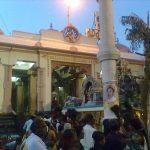
800px-Palani_Adivaaram, Kodi Maram Temple, palani
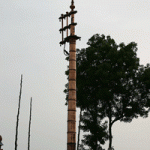
kodimaram, Kodi Maram Temple, palani
Contact Details
Official Address:
Arulmigu Dhandayuthapani Swamy Temple,
Palani, Dindigul District, Tamil Nadu 624601.
Official Records & Reference
| Deity: | Arulmigu Dhandayuthapani Swamy |
|---|---|
| Architectural Style: | Dravidian |
| Locale: | Palani |
| District: | Dindigul |