Ladan Cave Temple, Madurai: History, Timings & Complete Darshan Guide
Receive daily temple updates, divine darshan, and morning bhajans directly on WhatsApp.
Contents
- 1 Introduction & Spiritual Essence
- 2 Historical Origins & Scriptural Legend
- 3 Architectural Marvels
- 4 Darshan & Ritual Logistics
- 5 Practical Visitor Guidance
- 6 Pilgrimage Connectivity
- 7 Frequently Asked Questions (FAQs)
- 8 Photo Gallery
Introduction & Spiritual Essence
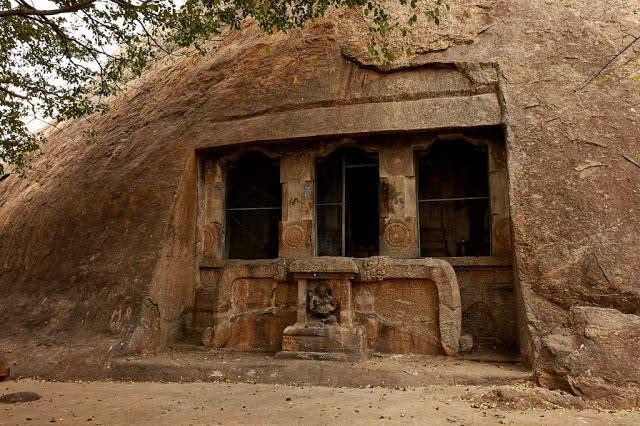
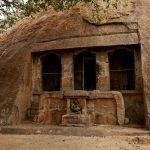
Nestled within the historic granite ridges of Yanaimalai (Elephant Hill) in Madurai, the Ladan Cave Temple stands as a silent sentinel of history and devotion. This ancient rock-cut sanctuary is dedicated to Lord Murugan (Kartikeya), the god of war and victory, and his consort Devayana (Devasena). Unlike modern structural temples, this shrine is carved directly into the living rock, embodying the raw spiritual energy of the early Pandya period.
Phalaśruti: Why Devotees Visit
Devotees flock to the Ladan Cave Temple seeking the blessings of Lord Murugan for victory over obstacles and spiritual clarity. The presiding deity is revered for his ability to cleanse ancestral karma and grant the wisdom to overcome life’s battles. Pilgrims believe that the unique energy of Yanaimalai, a protected archaeological site, amplifies the potency of prayers offered here, helping to remove doshas (afflictions) and instill courage.
Historical Origins & Scriptural Legend
The history of Ladan Cave Temple is intertwined with the legendary battles between the Pandyas and Cholas and the spread of Jainism in the region.
The Legend of the Stone Elephant
According to the Thiruvilayadal Purana, a Chola king, unable to conquer the Pandya ruler, sought the aid of Jain mystics. Through their powers, they created a gigantic elephant to destroy the Pandya capital. Facing annihilation, the Pandya king prayed to Lord Siva. In response, Lord Siva sent the Narasinga Asthram, which turned the giant elephant into a stone hill—Yanaimalai. This hill is believed to be the very elephant that stands eternally as a mountain.
📖 Related: Ramakrishna Mutt Temple Mylapore: History, Darshan Timings & Guide
Temple Construction & Lineage
According to temple records and ASI (Archaeological Survey of India) findings, the Ladan Cave Temple was established in the 8th Century A.D. The adjacent Narasimhar Temple was constructed by Parantaka Nedunchadaya Varaguna Pandya. The cave temple itself was likely built by Pandya kings as a counter-influence to the flourishing Jainism of Yanaimalai. Tradition holds that the temple is named after Lada Sanyasi, a monk from Bengal (historically referred to as Lada Desam), whose sculpture is inscribed at the base of the stairs.
Architectural Marvels
The temple is a masterpiece of Early Pandya Rock-Cut Architecture, characterized by its simplicity and direct integration with the granite landscape.
Style and Vastu Elements
While technically a cave temple, it exhibits features that would later evolve into the intricate Dravida style of temple architecture. The sanctum (Garbhagriha) is rectangular, housing the deities in a natural rock setting, adhering to the spiritual Vastu principles of Bhuta (elemental) harmony.
Notable Sculptures and Features
- The Mandapam: The front hall is supported by half-pillars (pilasters). Exquisite carvings of a peacock and a cock adorn the left and right pilasters respectively, symbolizing Lord Murugan’s divine vehicle and association.
- The Deities: Lord Murugan is depicted wearing a Kannimaalai (flower garland) and a Channaveeram (crossed chain). Goddess Devasena stands by his side, intricately carved with hairstyles and attire resembling a royal reception.
- Decorative Elements: The roof and pillars are adorned with fully blossomed lotus flowers carved in square and octagonal shapes, along with wavy corbels (tharangapodigai).
- Inscriptions: A Vatteluthu script inscription on the eastern wall dates to the 9th Century A.D., mentioning the renovation work by a Somayaji (Brahmin) named Parivirajakar.
Protection Status: Ladan Cave Temple is a protected monument under the Archaeological Survey of India (ASI).
Darshan & Ritual Logistics
While the cave temple is an archaeological marvel, it remains an active site of worship. Below are the standard timings and ritual schedules.
📖 Related: Ayya Vaikundar Temple Anjugramam: History, Darshan Timings & Complete Guide
Daily Darshan Timings
| Session | Timing |
|---|---|
| Morning Darshan | 6:00 AM – 12:00 PM |
| Afternoon Recess | 12:00 PM – 4:00 PM |
| Evening Darshan | 4:00 PM – 7:00 PM |
| Cave Closure | 7:00 PM – 6:00 AM (Next Day) |
Key Sevas & Online Booking
Given the protected status of the site, large-scale Yagnas are usually performed at the adjacent Narasimhar Perumal Temple or the larger temples in Madurai. However, regular rituals at Ladan Cave include:
- Abhishekam: Performed with milk, honey, and sandalwood paste.
- Archana: Recitation of Skanda Shashti Kavacham and Om Muruga mantras.
- Deepa Aradhana: Evening lamp offering.
Note on Booking: As this is a protected archaeological cave temple, formal online seva booking is typically not required. Devotees can participate in rituals by contacting the local Madurai Hindu Religious & Charitable Endowments (HR&CE) office or the adjacent Narasimhar Temple administrators for specific festival requirements.
2026 Major Festival Dates
- Thaipusam: January 13, 2026
- Skanda Shashti: June 1, 2026 – June 7, 2026
- Vaikasi Visakam: June 3, 2026
- Karthigai Deepam: November 7, 2026
Practical Visitor Guidance
Visiting Yanaimalai requires a bit of preparation due to its rugged terrain and protected nature.
Rules & Etiquette
- Dress Code: Traditional attire is recommended (Dhoti/Saree). Modest clothing is required.
- Photography: Photography is permitted outside the cave but restricted inside the sanctum. Drones are prohibited over protected monuments.
- Footwear: Must be removed at the base of the hill before climbing the rock-cut steps.
- Accessibility: The climb involves steep, rock-cut steps. It is not wheelchair accessible. Seniors and children require assistance.
Crowd Management & Seasonal Advice
- Best Time to Visit: Early morning (6:30 AM – 8:00 AM) to avoid the Madurai heat and enjoy serene darshan.
- Seasonal Tip: During May (peak summer), carry ample water and protect yourself from the sun. The granite reflects heat intensely.
- Crowds: Weekends attract local families. For a contemplative visit, opt for weekday mornings.
📖 Related: Manikka Vinayakar Temple, Rockfort: History, Darshan Timings & Guide
Pilgrimage Connectivity
How to Reach Ladan Cave Temple
The temple is located in Yanaimalai, situated on the Madurai to Melur Road (State Highway 74).
- By Air: Madurai International Airport (IXM) is approximately 22 km away (45 mins by taxi).
- By Rail: Madurai Railway Junction (MDU) is about 12 km away.
- By Road: From Madurai Central or Mattuthavani Integrated Bus Terminus, take a mini-bus or auto-rickshaw to Othakadai junction. From Othakadai, head left towards the hill (visible from the road).
Nearby Sacred Sites
Enhance your pilgrimage by visiting these sites within a 10-15 km radius:
- Narasingam Yoga Narasimha Perumal Temple: Located at the foot of Yanaimalai itself. A unique Vishnu temple housing the Narasimha avatar.
- Kallazhagar Temple (Azhar Kovil): Located 8 km away in Alagar Koyil, dedicated to Lord Vishnu in his prototypical form.
- Thirumohur Kala Megha Perumal Temple: Located 6 km away, dedicated to Vishnu as the one who attracted the cloud (Megham).
Frequently Asked Questions (FAQs)
1. Is there a VIP darshan entry at Ladan Cave Temple?
No. As this is a protected archaeological cave with a compact sanctum, there are no VIP darshan tickets. Darshan is general and available to all devotees on a first-come, first-served basis.
2. Can we offer Abhishekam ourselves?
Generally, only the designated priests (Archakas) perform Abhishekam inside the sanctum. Devotees can purchase the materials (milk, fruit, etc.) and hand them to the priest for offering.
3. Is Ladan Cave Temple safe for children?
Yes, but the climb up Yanaimalai involves steep rock steps. Parents must hold the hands of young children while ascending or descending.
4. Are there hotels near Yanaimalai?
While there are few hotels directly at Yanaimalai, Othakadai and Madurai city offer abundant accommodation ranging from budget lodges to 5-star heritage hotels.
5. Is the cave temple part of a larger complex?
Yes, Yanaimalai is a multi-faith complex containing Jain sculptures, the Ladan Cave (Murugan), the Narasingam Perumal Temple (Vishnu), and an ancient Sivan Temple.
Photo Gallery

S-TN-C27_Santum_View_Ladan_koil_Madurai
800px-The_Path_to_the_rock_cut_Temple.
2017-01-19 (2), Ladan Cave Temple, Yanaimalai, Madurai
2017-01-19, Ladan Cave Temple, Yanaimalai, Madurai

800px-Information_Board_giving_details_about_Ladan_Koil
Ladan Cave Temple, Yanaimalai, Madurai