
Contents
Introduction & Spiritual Essence
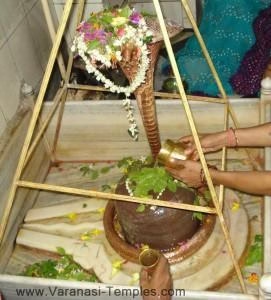
Maha Siddheshwar Temple, located in the spiritual heart of Varanasi (Kashi), is a profound center for devotees seeking Siddhi (spiritual accomplishment). Dedicated to Lord Shiva in his form as the “Lord of All Siddhis,” this ancient shrine is one of the 108 revered Shiva temples mentioned in the Kashi Khand of the Skanda Purana.
Phalaśruti: The Benefit of Devotion
According to ancient scriptures, worshipping Maha Siddheshwar fulfills the deepest desires of the devotee. It is believed that a visit to this temple helps in:
- Attaining Siddhis: Unlocking inner potential and divine powers through focused worship.
- Cleansing Ancestral Karma: Performing Tarpan and Shradh here liberates ancestors from the cycle of rebirth.
- Removing Obstacles: The deity is known as the remover of hurdles in one’s spiritual and material journey.
Historical Origins & Scriptural Legend
The existence of Maha Siddheshwar Temple is deeply intertwined with the textual evidence of the Kashi Khand, a portion of the Skanda Purana. While the exact date of construction remains shrouded in antiquity, temple records and oral traditions trace its lineage back to a period where Kashi was the epicenter of spiritual learning.
| Date built: | – |
|---|---|
| Deity: | Maha Siddheshwar |
| Architectural style: | Hindu Temple architecture |
| Major festivals | – |
| Locale: | Varanasi |
| District:: | Varanasi |
| Address: | – |
| Phone | – |
The Legend of Siddha Kund
Tradition holds that Goddess Parvati requested Lord Shiva to reveal the location of various powerful Shiv Lingas in Kashi. As described in Chapter 97 of the Kashi Khand, Lord Shiva manifested the Maha Siddheshwar Linga near the holy Siddha Kund. It is said that Sage Narada and other celestial beings visit this spot to perform penance, making the energy of this temple uniquely potent for devotees.
Architectural Marvels
The temple reflects the ancient Nagara style of Hindu architecture, characterized by its lofty shikhara (spire) and intricate carvings, though it has been renovated several times to preserve its sanctity.
- Sanctum Sanctorum: The inner chamber houses the Swayambhu (self-manifested) Linga, which is the focal point of devotion.
- Mandapa: The pillared hall allows devotees to gather for prayers and rituals. The stone carvings often depict scenes from Shiva’s mythology.
- Vastu Compliance: The temple is oriented strictly according to Vastu Shastra principles, ensuring a flow of positive energy from the entrance to the inner shrine.
Note: While specific ASI/UNESCO status varies for smaller shrines in Varanasi, the temple is maintained under the supervision of the Varanasi Temple Trust.
Darshan & Ritual Logistics
Devotees can participate in various Sevas (services) to honor Lord Maha Siddheshwar. For 2026, specific bookings are recommended due to the high influx of pilgrims during Mahashivratri and Shravan months.
Daily Darshan Timings
Timings are subject to change during festivals.
| Session | Timings |
|---|---|
| Morning Darshan | 06:00 AM – 12:00 PM |
| Evening Darshan | 04:00 PM – 09:00 PM |
Key Sevas & Online Booking
To ensure a seamless experience, most Sevas can now be booked via the Varanasi Temple Administration portal.
- Abhishekam: Ritual bathing of the Linga. Slot: 6:30 AM – 7:30 AM
- Rudrabhishek: A powerful Vedic ritual for peace and prosperity. Booking required 48 hours in advance.
- Archana: Individual prayer offering. Available on-site.
Festival Dates for 2026
Plan your visit around these significant dates:
- Mahashivratri: February 26, 2026 (Extended hours likely till 2 AM)
- Shravan Mondays (Sawan Somvar): July 7, 14, 21, 28, 2026 (Peak crowd; early morning visit advised)
- Nag Panchami: July 30, 2026
Practical Visitor Guidance
Dress Code & Etiquette
Visitors must dress modestly. Traditional Indian attire (Kurta-Pajama, Dhoti, or Saree/Salwar Kameez) is preferred. Western clothing like shorts or sleeveless tops is discouraged inside the sanctum.
Photography & Electronics
- Photography inside the Garbhagriha (main shrine) is strictly prohibited.
- Mobile lockers are available near the entrance for depositing electronic devices and leather items.
Crowd Management & Accessibility
- Best Time to Visit: Early mornings (6:00 AM – 8:00 AM) or late evenings (8:00 PM onwards).
- Seasonal Advice: Varanasi summers (April–June) are extremely hot; carry a water bottle and cover your head.
- Accessibility: The temple is accessible via rickshaw, but the lanes of Assi Ghat can be narrow. Wheelchair access may be limited in older sections of the structure.
Pilgrimage Connectivity
How to Reach
The temple is situated in the Assi area, near Abhay Cinema and Goenka College.
- Airport: Lal Bahadur Shastri International Airport (LBS) is approximately 25 km away (45 mins by taxi).
- Railway: Varanasi Junction (BSB) is 8 km away. An auto-rickshaw is the most convenient mode of transport.
- Road: Located off the Varanasi-Allahabad Highway (NH-19). Local transport from Durga Kund or Assi Ghat Crossing is readily available.
Nearby Sacred Sites
Complete your pilgrimage by visiting these nearby temples:
- Kal Bhairav Temple: Located 3 km away, the guardian deity of Varanasi.
- Shri Durga Temple (Durga Kund): 2 km away, a vibrant red temple dedicated to Goddess Durga.
- Sankat Mochan Hanuman Temple: 2.5 km away, famous for relieving devotees from troubles.
Photo Gallery
Frequently Asked Questions (FAQ)
1. Is there a VIP darshan entry available?
Yes, the Varanasi Temple Administration occasionally provides special entry tickets during peak festivals. However, on regular days, general darshan is efficient if visited during early morning hours.
2. How far is the temple from Dashashwamedh Ghat?
It is approximately 5-6 km from Dashashwamedh Ghat. An auto-rickshaw ride takes about 20-30 minutes depending on traffic.
3. Is Maha Siddheshwar Temple the same as the one in Jaitpura?
There is another Siddheshwar Temple located at J-6/85, Jaitpura. However, the Maha Siddheshwar Temple described in the Kashi Khand is specifically located in the Assi region near Siddha Kund.
4. Can I perform Rudrabhishek for a deceased relative?
Absolutely. This is one of the most potent rituals for liberating ancestors’ souls. You can book this ritual online or consult the temple Pandit on-site.
5. What are the contact details for the temple?
For official inquiries, please contact the Varanasi District Administration or the temple office at Goenka College, Assi, Varanasi.
Recent Posts

Shri Kaamkoteeshwar Mandir, Varanasi – History & Significance
In the heart of Kashi, the eternal city of Lord Shiva, where the Ganges flows with celestial grace, stands the Shri Kaamkoteeshwar Mandir. This sacred Sannidhi is not merely a temple but a profound spiritual bridge between the Northern…

ओ सांवरे तूने ही मुझको संभाला – Lyrics & Meaning
ओ सांवरे तूने ही मुझको संभाला – A Prayer to Shyam Origin & Spiritual Essence Why This Bhajan Resonates Devotees chant this when overwhelmed by life’s storms—the refrain ‘तूने ही मुझको संभाला’ is the soul’s sigh of relief: “You…

कथा ये है महाराज मेरे की – Lyrics & Meaning
कथा ये है महाराज मेरे की छत्रपति संभाजी महाराज – A Prayer to Chhatrapati Sambhaji Maharaj Origin & Spiritual Essence Why This Bhajan Resonates Devotees chant this when their spirit feels tested—its powerful refrain “महाराज मेरे” is a soul’s…

Rigveda Samhita Yathartha Anuvada (ऋग्वेद संहिता यथार्थ अनुवाद) – Complete Set with Anvayartha & Hindi/English Translation
The Rigveda is the oldest surviving scripture of humanity and the foundational text of Sanātana Dharma. For serious students, scholars, UPSC aspirants studying ancient Indian history, Sanskrit learners, and spiritual seekers, a precise and grammatically structured translation is indispensable.…

आना भी अकेला है जाना भी अकेला है – Lyrics & Meaning | BharatTemples
आना भी अकेला है जाना भी अकेला है – A Prayer to the Divine Witness Origin & Spiritual Essence Why This Bhajan Resonates Devotees turn to this bhajan in moments of deep reflection—when life’s attachments begin to ache. The…

माता शेरावाली के द्वार जो भी जाता है – Lyrics & Meaning
माता शेरावाली के द्वार जो भी जाता है – A Prayer to Maa Sherawali Origin & Spiritual Essence Why This Bhajan Resonates Devotees turn to this bhajan in times of fear or uncertainty—its promise that no one leaves Maa’s…

मार लेना सपणी उबार लेणा भवरा – Lyrics & Meaning
मार लेना सपणी उबार लेणा भवरा – A Prayer to the Divine Beloved Origin & Spiritual Essence Why This Bhajan Resonates Devotees chant this in moments of deep vulnerability—its cry of “मार लेना सपणी, उबार लेणा भवरा” is the…

हमें श्याम सुंदर भरोसा तुम्हारा – Lyrics & Meaning
हमें श्याम सुंदर भरोसा तुम्हारा – A Prayer to Shyam Sundar Origin & Spiritual Essence Why This Bhajan Resonates Devotees chant this when feeling alone—its refrain ‘de do sahara’ is the soul’s cry for divine support. Lyrics in Hindi…

Mere Satguru Ne Di Thi Davai Lyrics in Hindi & Meaning
Mere Satguru Ne Di Thi Davai: Invoking the Guru’s Liberating Wisdom This soul-stirring bhajan venerates the Satguru (True Spiritual Master) as the divine physician who dispenses the only remedy for life’s deepest sufferings. Composed by Sant Karmaveer Tufani, it…

Janm Diyo Thari Maa Dukh Dekhiyo Lyrics in Hindi & Meaning
जन्म दियो थारी माँ दुख देखियो (Maa’s Grief Upon Birthing You) This soul-stirring Chetavani Bhajan (admonitory hymn) is addressed to the Divine Mother (Maa) – a call for repentance when children forget their filial duties in the dark age…