
Contents
Introduction & Spiritual Essence of Narmadeshwar
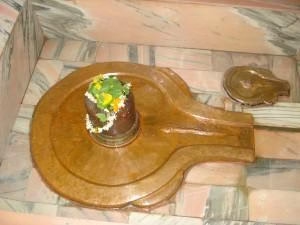
The Narmadeshwar Temple in Varanasi stands as a profound testament to the divine interplay of rivers and devotion. Located near the sacred banks of the Ganga, this shrine is dedicated to Lord Shiva in his form as the Lord of the Narmada. Unlike the traditional Shiva Lingams carved from stone, the primary deity here is intimately connected to the river Narmada, embodying a unique spiritual synergy.
Phalaśruti: The Spiritual Benefits
According to ancient scriptures, the significance of visiting this temple is unparalleled. The Kashi Khand of the Skanda Purana explicitly details the benefits (Phalaśruti) of darshan here:
- Cleansing of Sins: It is believed that merely gazing upon the Narmadeshwar Lingam washes away accumulated sins, equivalent to bathing in the holy waters of the Narmada river itself.
- Ancestral Karma: Offering prayers here is said to liberate the devotee’s ancestors from the cycle of rebirth, offering them eternal peace.
- Divine Bhakti: The temple is a gateway for seekers of pure devotion (Bhakti), granting the boon of Mukti (liberation).
Historical Origins & Scriptural Legend
The history of the Narmadeshwar Temple is rooted deeply in a celestial narrative involving Lord Shiva and the river goddess Narmada.
The Legend of Narmada and Shiva
Tradition holds that once, a debate arose among sages regarding the supremacy of holy rivers. While the Ganga, Yamuna, and Saraswati were extolled, the river Narmada felt slighted. Seeking equivalence to the Ganga, Narmada performed intense penance in Kashi near the Trilochaneshwar area.
Appearing before her, Lord Brahma declined her request, stating that no river could equal the Ganga and no God equaled Lord Shiva. Undeterred, the Narmada River continued her austerities near Pilpila Teerth. Pleased by her devotion, Lord Shiva manifested before her.
Scriptural Reference: Kashi Khand
As narrated in Kashi Khand, Chapter 92, Lord Shiva granted Narmada a divine boon. He declared that any stone found in the riverbed of the Narmada would be treated as a Shiv Ling. Furthermore, he stated that while bathing in other rivers requires specific durations to cleanse sins, a mere sight of the Narmada river absolves all sins.
Shiva established himself at this spot as Narmadeshwar, a Lingam capable of granting liberation. The scripture promises that even listening to the Mahatmya (glory) of this temple cleanses the devotee of impurities.
Architectural Marvels
The temple architecture reflects the classic Nagara style, prevalent in North Indian temple construction. While specific historical records regarding the dynasty or century of the original construction are sparse, the structure has been meticulously maintained and renovated by local trusts over centuries.
Design and Layout
The sanctum (Garbhagriha) houses the swayambhu (self-manifested) Lingam, which is dark in complexion and perpetually adorned with water offerings. The Shikhara (tower) above the sanctum rises elegantly, symbolizing the ascent of the soul towards the divine.
The outer walls feature intricate carvings depicting scenes from the Shiva Purana. The Mandapa (hall) allows devotees to sit and meditate, providing a serene atmosphere despite the bustling city outside. The complex is situated in a narrow lane near the Ghats, preserving the ancient aesthetic of Varanasi.
Darshan & Ritual Logistics
To ensure a smooth spiritual experience, devotees should plan their visit according to the temple timings and available Sevas. Given the narrow lanes of Varanasi, arriving on foot via the Ghats is often recommended.
Daily Timings
| Session | Timing | Activity |
|---|---|---|
| Morning | 5:00 AM – 12:00 PM | Morning Aarti & Abhishekam |
| Evening | 4:00 PM – 10:00 PM | Evening Aarti & Shayan Darshan |
Key Sevas & Online Booking
The temple administration facilitates various Sevas. As of 2026, bookings can be made via the official temple portal or associated religious trusts.
- Abhishekam: Performed with milk, honey, and ghee. Best timing: 6:00 AM – 8:00 AM.
- Rudrabhishek: A detailed Vedic ritual for prosperity and health.
- Archana: Recitation of the devotee’s family lineage (Gotra) and name.
- Online Seva Booking: Available via the Kashi Vishwanath Temple official app or the Varanasi District administration portal.
2026 Festival Dates (Major Events)
- Maha Shivaratri: February 26, 2026 (Grand night-long vigil and special Abhishekam).
- Kartik Purnima: November 5, 2026 (Deep Daan and Ganga Snan).
- Savan Somvar: July 14, 2026 – August 11, 2026 (Special morning darshan for Mondays).
Practical Visitor Guidance
Visiting Narmadeshwar Temple requires preparation due to the dense, historic nature of Varanasi’s old city.
Dress Code & Etiquette
Modest traditional attire is required. Men should wear dhoti or trousers (no shorts), and women should wear sarees or full-length dresses. The sanctum is small; maintaining silence is encouraged.
Crowd Management & Best Time to Visit
The temple sees peak crowds during Monday evenings and Savan season. For a peaceful darshan, visit between 9:00 AM and 11:00 AM on weekdays.
Tip: The lanes leading to Trilochan are steep and uneven. Wear comfortable walking shoes. Carry a reusable water bottle, especially during the summer months (April-June).
Photography & Mobiles
Photography is generally restricted inside the sanctum and Mandapa. It is advisable to keep mobile phones on silent mode.
Pilgrimage Connectivity
The temple is situated in the heart of Varanasi, making it accessible via various modes of transport.
How to Reach
- Nearest Airport: Lal Bahadur Shastri International Airport (VNS) is approximately 25 km away. Taxis and e-rickshaws are available.
- Nearest Railway: Varanasi Junction (BSB) is about 6 km away. Auto-rickshaws can drop you at Assi Ghat or Dashashwamedh Ghat.
- By Road: The temple is located at A-2/79, behind Trilochan, near Pilpila Teerth. From the main road, it is a walk through narrow heritage lanes.
Nearby Sacred Sites (Pilgrimage Circuit)
- Trilochaneshwar Temple: Located just meters away, dedicated to Lord Shiva with three eyes.
- Pilpila Teerth: A sacred pond mentioned in the Kashi Khand, near the temple.
- Manikarnika Ghat: The primary cremation ground of Varanasi, a significant site for understanding the cycle of life and death, located a short walk away.
Frequently Asked Questions
1. What is the exact address of Narmadeshwar Temple?
The temple is located at A-2/79, behind Trilochan, Pilpila Teerth, Varanasi. The nearest landmark is the Trilochan Temple.
2. Is there a VIP darshan entry available?
Due to the compact size of the temple and its narrow entryway, there is no separate VIP entry queue. However, pre-booked Seva tickets allow devotees to bypass the general queue during specific ritual hours.
3. Are non-Hindus allowed inside the temple?
While the temple is historically open to all, the narrow sanctum and traditional regulations of the Kashi region often restrict entry to devotees of Hindu, Jain, Buddhist, and Sikh faiths. Please check with the local administration for current policies.
4. What is the significance of the Lingam here?
The Lingam is associated with the Narmada River. According to legend, Lord Shiva granted the wish that any stone from the Narmada riverbed is a Shiv Ling. The darshan of this specific Lingam grants Mukti (liberation) as per the Kashi Khand.
5. Is online Prasad delivery available?
Yes, through the official Varanasi temple portals, devotees can order Prasad (specifically Abhishek Prasad) and have it delivered to their registered address. International delivery is limited.
Recent Posts

Mere Satguru Ne Di Thi Davai Lyrics in Hindi & Meaning
Mere Satguru Ne Di Thi Davai: Invoking the Guru’s Liberating Wisdom This soul-stirring bhajan venerates the Satguru (True Spiritual Master) as the divine physician who dispenses the only remedy for life’s deepest sufferings. Composed by Sant Karmaveer Tufani, it…

Janm Diyo Thari Maa Dukh Dekhiyo Lyrics in Hindi & Meaning
जन्म दियो थारी माँ दुख देखियो (Maa’s Grief Upon Birthing You) This soul-stirring Chetavani Bhajan (admonitory hymn) is addressed to the Divine Mother (Maa) – a call for repentance when children forget their filial duties in the dark age…
Bhadi Sabha Mein Thane Manaun Lyrics in Hindi & Meaning
Bhadi Sabha Mein Thane Manaun: Invoking the Spear-Wielding Mother Mata Bhawani (श्री ज्वाला भवानी), the fiery manifestation of Shakti worshipped as the Protector of Dharma in Her Dhaulagarh sanctum. Origin & Spiritual Essence Composed in Rajasthani folk tradition by…
श्याम सुन्दरवा छोटे छोटे कनुवा Lyrics & Meaning
श्याम सुन्दरवा छोटे छोटे कनुवा (Shyam Sundarva Chhote Chhote Kanuva) is a heartfelt invocation to Lord Krishna in his most enchanting form—Shyam Sundar (the dark, beautiful one). This bhajan is a plea for the divine child Kanha to grace…
Maat Meri Chintapurni Lyrics in Hindi & Meaning
Maat Meri Chintapurni is a heartfelt devotional prayer dedicated to Maa Chintapurni, a form of the Divine Mother. She is revered as the remover of worries and the granter of wishes, especially venerated in the Himalayan region of Himachal…

थारी रे नदियां का ढावा पे खीची राजा Lyrics & Meaning
खीची राजा का अद्भुत युद्ध: एक शौर्य गाथा यह भजन एक पौराणिक या ऐतिहासिक शूरवीर राजा की वीरता का वर्णन करता है, जो प्रायः गुजराती लोक संस्कृति में लोककथाओं का हिस्सा है। इसकी रचना दुर्गेश कटारा ने की है…
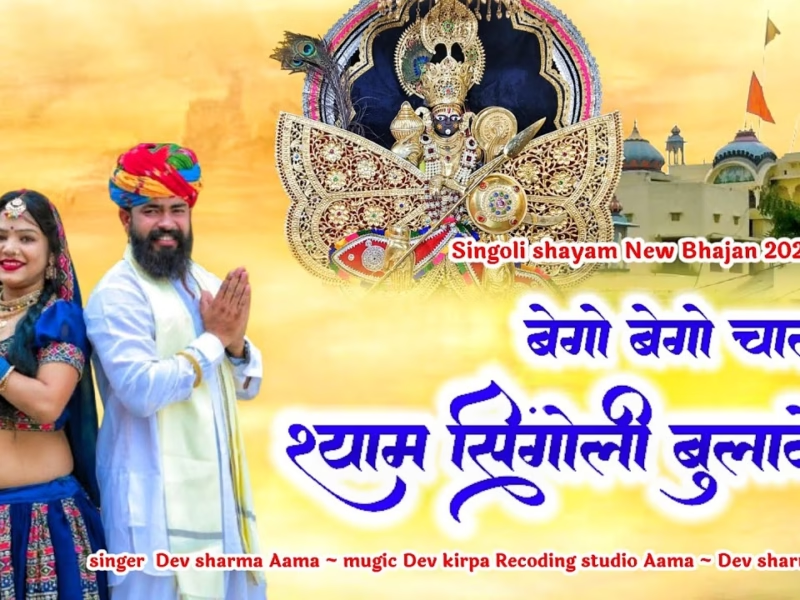
बेगो बेगो चाल श्याम सिंगोली बुलावे रे Lyrics in Hindi & Meaning
Bhajan Title & Deity This bhajan, बेगो बेगो चाल श्याम सिंगोली बुलावे रे, is dedicated to Lord Shyam, a revered form of Lord Krishna. Origin & Spiritual Essence The composer of this bhajan is not specified, but it is…

सिंगोली रा श्याम पधारो Lyrics in Hindi & Meaning
सिंगोली रा श्याम पधारो Bhajan & Deity This sacred bhajan, सिंगोली रा श्याम पधारो, is dedicated to Lord Shyam, a revered deity in the Hindu tradition. The composer of this bhajan is Dev Sharma Aama. Origin & Spiritual Significance…

हंसकर पार्वती शिव जी ने वचन सुनावती जी Lyrics in Hindi & Meaning
हंसकर पार्वती शिव जी ने वचन सुनावती जी – A Devotional Bhajan Origin & Spiritual Significance This beautiful bhajan, हंसकर पार्वती शिव जी ने वचन सुनावती जी, is a heartfelt devotion to Lord Shiva and Goddess Parvati, embodying the…

ज्ञान सतगुरु समझायो ए Lyrics in Hindi & Meaning
This bhajan, ज्ञान सतगुरु समझायो ए, is dedicated to the revered deity, Shyam, and is a testament to the transformative power of spiritual guidance. The composer of this bhajan is unknown, but it is deeply rooted in the Rajasthani…