Shree Charbhujaji Mandir: History, Timings & Complete Pilgrimage Guide

Receive daily temple updates, divine darshan, and morning bhajans directly on WhatsApp.
Contents
- 1 Shree Charbhujaji Mandir: The Divine Pilgrimage of Four-Armed Vishnu
Shree Charbhujaji Mandir: The Divine Pilgrimage of Four-Armed Vishnu
Nestled in the serene landscapes of Garhbor, Rajasthan, Shree Charbhujaji Mandir stands as a monumental testament to Vaishnava devotion and architectural brilliance. For centuries, this sanctum has drawn devotees seeking the blessings of Lord Vishnu in his unique, miraculous form. This definitive guide invites you on a spiritual journey, unraveling the history, rituals, and sacred significance of this ancient temple.
Introduction & Spiritual Essence
The Shree Charbhujaji Mandir is a revered shrine dedicated to Lord Vishnu. The name “Charbhuja” translates to “The One with Four Arms,” a direct reference to the deity’s divine form holding the Shankha (conch), Chakra (discus), Gada (mace), and Padma (lotus). This manifestation of Vishnu is deeply rooted in the Vaishnava cult of Rajasthan.
Phalaśruti: Why Visit Charbhujaji?
According to local devotional texts and the oral Sthala Purana, a visit to Charbhujaji offers profound spiritual benefits, known as Phalaśruti:
- Removal of Ancestral Karmas: It is believed that offering prayers here helps resolve Pitra Dosha (ancestral afflictions), ensuring peace for departed souls.
- Protection and Strength: As the deity holds the Chakra and Gada, devotees believe the temple offers protection from enemies and removes obstacles in one’s path.
- Fulfillment of Desires: The “miraculous” idol is famed for granting the sincere wishes of devotees, particularly those seeking stability and prosperity.
📖 Related: Ramanathaswamy Temple Rameswaram: History, Darshan Timings & Guide
Historical Origins & Scriptural Legend
The roots of Charbhujaji stretch back to the mid-15th century, intertwined with dreams and divine intervention.
The Dream of Shri Gang Dev
Tradition holds that the temple was established in 1444 AD by Shri Gang Dev, a pious devotee. According to legend, Gang Dev received divine instructions in a dream to retrieve a deity from the waters. The idol was recovered and established in the village, which was originally known as Badri. Consequently, the deity is also revered as Badri Nath.
Scriptural and Epigraphic Evidence
While the temple pre-dates the Mughal era, it stands as a symbol of resilience. Inscriptions within the temple complex validate the 1444 AD construction date. The temple is a key center for the Garadia and Rajput communities, who view the sword and shield depicted in the Darshan as symbols of Rajput chivalry. Mythological connections suggest the idol was worshipped even during the Dwapar Yuga (the second age in Hindu cosmology) and later by the Pandavas, enhancing its divine aura.
Architectural Marvels
Charbhujaji is a prime example of the Indo-Aryan (Nagara style) architecture prevalent in Rajasthan, featuring a distinct Phamsana roof system typical of the region.
The Sanctum and the Idol
The central shrine houses the 85-centimeter-high idol of Lord Charbhujanath. The artistic execution is exceptional, utilizing a blend of white marble, lime mortar, and intricate mirror work (known locally as Kanch Kala).
Unique Features
- Doors of Gold and Silver: The inner sanctum (Garbhagriha) is protected by shutters made of gold, while the outer shutters are crafted from silver.
- Garuda Mandapa: An external courtyard features an installation of Garuda, the eagle mount of Lord Vishnu, facing the deity.
- Entrance Guardians: The main entrance is flanked by stone elephants, symbolizing royalty and strength.
Note on Preservation: While the temple has its own heritage protocols, it is maintained by the local trust, ensuring the preservation of the 15th-century craftsmanship. It does not currently hold an ASI (Archaeological Survey of India) or UNESCO tag, maintaining its status as a living, community-maintained temple.
📖 Related: Waneshwar Mahadev Temple Kanpur: History, Darshan Timings & Guide
Darshan & Ritual Logistics
To plan your visit effectively, especially for specific Sevas (ritual offerings), please refer to the schedule below.
Daily Timings
| Darshan Session | Timings |
|---|---|
| Morning Darshan | 5:30 AM – 1:00 PM |
| Afternoon Break | 1:00 PM – 4:30 PM |
| Evening Darshan | 4:30 PM – 9:00 PM |
| Special Note: Timings may extend during festivals (Janmashtami, Diwali). | |
Key Sevas & Online Booking
Devotees can perform various Sevas to seek blessings. While online infrastructure varies by year, the following are standard offerings:
- Mangla Aarti: Early morning ritual (5:30 AM).
- Abhishekam: Ritual bathing of the deity (usually 8:00 AM – 10:00 AM).
- Archana (Naam): Recitation of the 108 names of Lord Vishnu.
- Sringar Darshan: Evening decoration viewing.
Booking Process: As of 2026, pilgrims can book standard Sevas via the official Rajasthan temple portals or by contacting the Mandir Choraha administration at Garhbor. For Abhishekam, advance booking (at least 24 hours prior) is recommended.
2026 Major Festival Dates
- Janmashtami: September 3-4, 2026
- Narasimha Jayanti: May 12, 2026
- Diwali (Bali Pratipada): October 19, 2026
- Holi: March 14, 2026
Practical Visitor Guidance
Ensuring a smooth pilgrimage experience requires understanding the local customs and logistics.
Code of Conduct & Rules
- Dress Code: Traditional attire is highly encouraged. Men should wear dhotis or trousers and shirts; women should wear sarees, salwar kameez, or long skirts. Avoid shorts and sleeveless tops.
- Photography: Photography is restricted inside the inner sanctum (Garbhagriha). It is permitted in the outer courtyards and premises, but please respect the privacy of worshippers.
- Mobile Electronics: Mobile phones should be kept on silent. Some areas may require leaving electronics in designated lockers (check at the entrance).
Crowd Management & Best Time to Visit
- Best Hours: Early morning (before 7:00 AM) or late evening (after 6:00 PM) for a peaceful Darshan.
- Seasonal Advice:
- Summer (May-June): Rajasthan is scorching. Carry a water bottle, umbrella, and cover your head while in the queue.
- Monsoon (July-August): The region receives moderate rain; carry a raincoat.
- Winter (November-February): The most pleasant time to visit, with cool mornings and evenings.
Pilgrimage Connectivity
How to Reach Charbhujaji
The temple is located in Garhbor, within the Kumbhalgarh tehsil of Rajsamand district.
- By Air: The nearest airport is (approx. 100 km). Taxis are available from the airport. **- By Rail: The nearest major railway station is Falna (approx. 60 km). Alternatively, the Charbhuja Road railway station connects to the region. Trains from Udaipur and Ahmedabad also connect via road.
- By Road: The temple is well-connected via NH 48 and state highways. Buses and taxis are available from Kumbhalgarh (15 km), Gomti Cross Road, and Rajsamand.**
**
📖 Related: Rudranath Temple: History, Panch Kedar Darshan Timings & Guide
Nearby Sacred Sites
Enhance your pilgrimage by visiting these nearby spiritual centers:
- Kumbhalgarh Fort (15 km): A UNESCO World Heritage site housing the Neelkanth Mahadev Temple and Vijay Stambh.
- Ranakpur Jain Temple (35 km): Famous for its intricate marble architecture and 1,444 unique columns.
- Rajsamand Lake (35 km): A historic lake built by Rana Raj Singh in the 17th century, featuring the Darparameshwar temple on its banks.
**
**
Photo Gallery
Witness the divine architecture and the serene surroundings of Shree Charbhujaji Mandir.
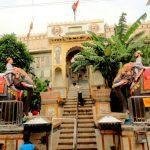
charbhuja-temple1, Shree Charbhujaji Mandir, Garhbor, Rajasthan

charbhuja-temple-rajsamand, Shree Charbhujaji Mandir, Garhbor, Rajasthan
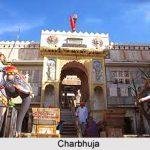
Charbhuja_Rajasthan, Shree Charbhujaji Mandir, Garhbor, Rajasthan
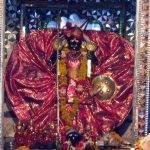
Shree Charbhujaji Mandir, Garhbor, Rajasthan
Frequently Asked Questions (FAQs)
1. What is the significance of the name ‘Charbhuja’?
Charbhuja translates to “Four-Armed,” referring to Lord Vishnu holding the conch, discus, mace, and lotus in his four hands. It symbolizes his omnipotence and protection.
2. Is there a VIP or special entry for Darshan?
Generally, the temple follows a free Darshan system for all devotees. However, during festivals, special passes may be issued by the temple trust for elderly citizens or large groups. Please check with the Choraha administration upon arrival.
3. Are there accommodation facilities available near the temple?
Yes, there are basic guesthouses and dharamshalas in Garhbor and Kumbhalgarh. For more luxurious stays, Rajsamand and Udaipur offer a wide range of hotels.
4. Is non-vegetarian food allowed near the temple?
No. As per strict Vaishnava traditions, the temple area and nearby premises are strictly vegetarian zones. Alcohol and non-vegetarian food are prohibited.
5. How old is the current idol?
While the temple was built in 1444 AD, oral traditions suggest the idol dates back to the Dwapar Yuga, making it ancient and self-manifested (Swayambhu), though the structural form was established by Shri Gang Dev.
**